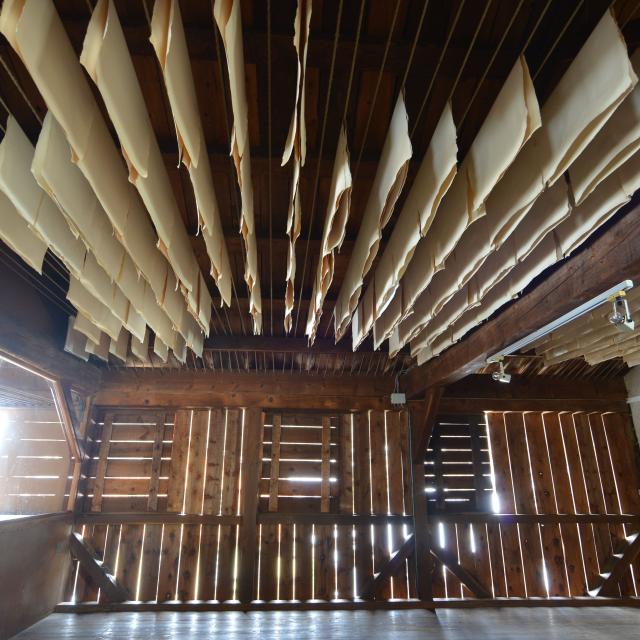
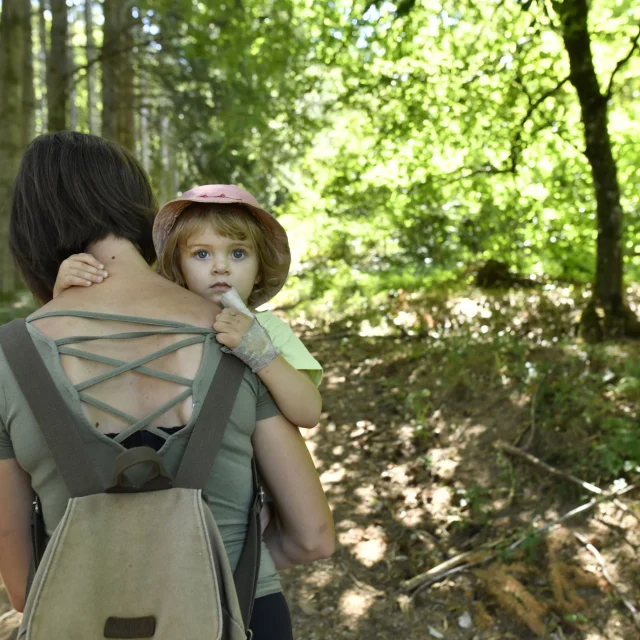
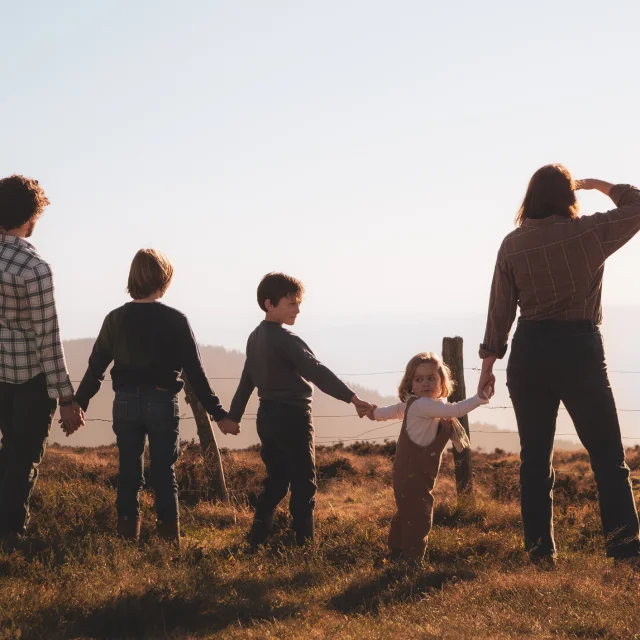
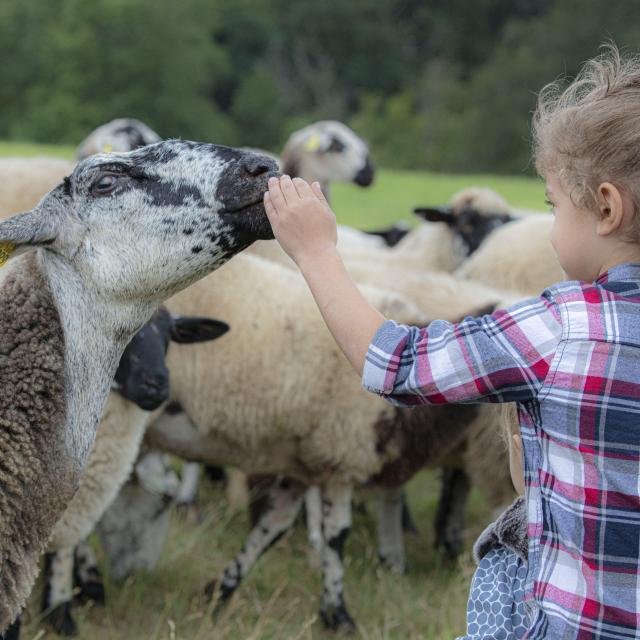
Fourme d’Ambert is one of Auvergne’s famous five PDO cheeses. Emblematic of the Livradois-Forez region and a native of the Hautes-Chaumes, it is produced at altitudes of between 600 and 1600 m in the Puy-de-Dôme, but also in a small part of the Loire and Cantal regions. It is thought to have possible Gallo-Roman roots, and even some legends link it to the Druids. However, it is now certain that it originated in the Middle Ages. The origins of Fourme d’Ambert lie in pastoral farming in the Foréz region. In those days, it was the women and children who took the herds to the summer pastures, from June to October, and made Fourme d’Ambert while the men stayed in the valleys and plains to make hay and grow crops. Nowadays, most of the Fourme d’Ambert is produced in dairies, although recent years have seen a resurgence in farmhouse production, which is highly prized on the markets.
 Report Ambert Cyclo Walk Aurelp 61
Taste and flavourLivradois-Forez, a land of epicureans
Nuggets from Livradois-Forez :
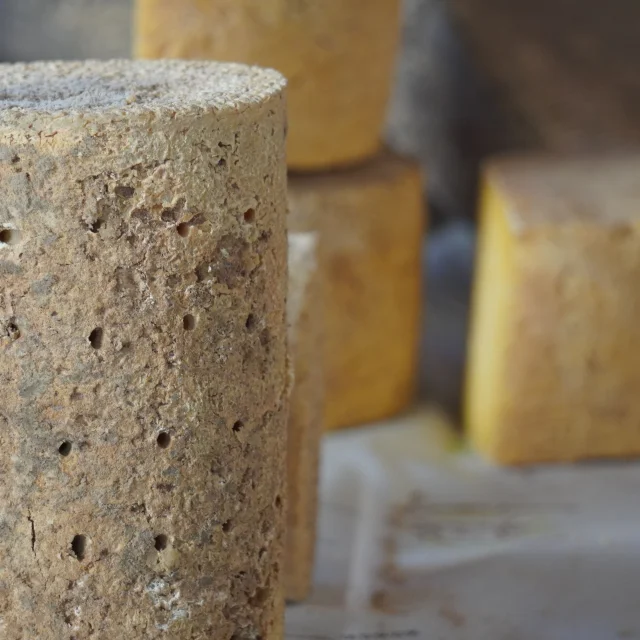
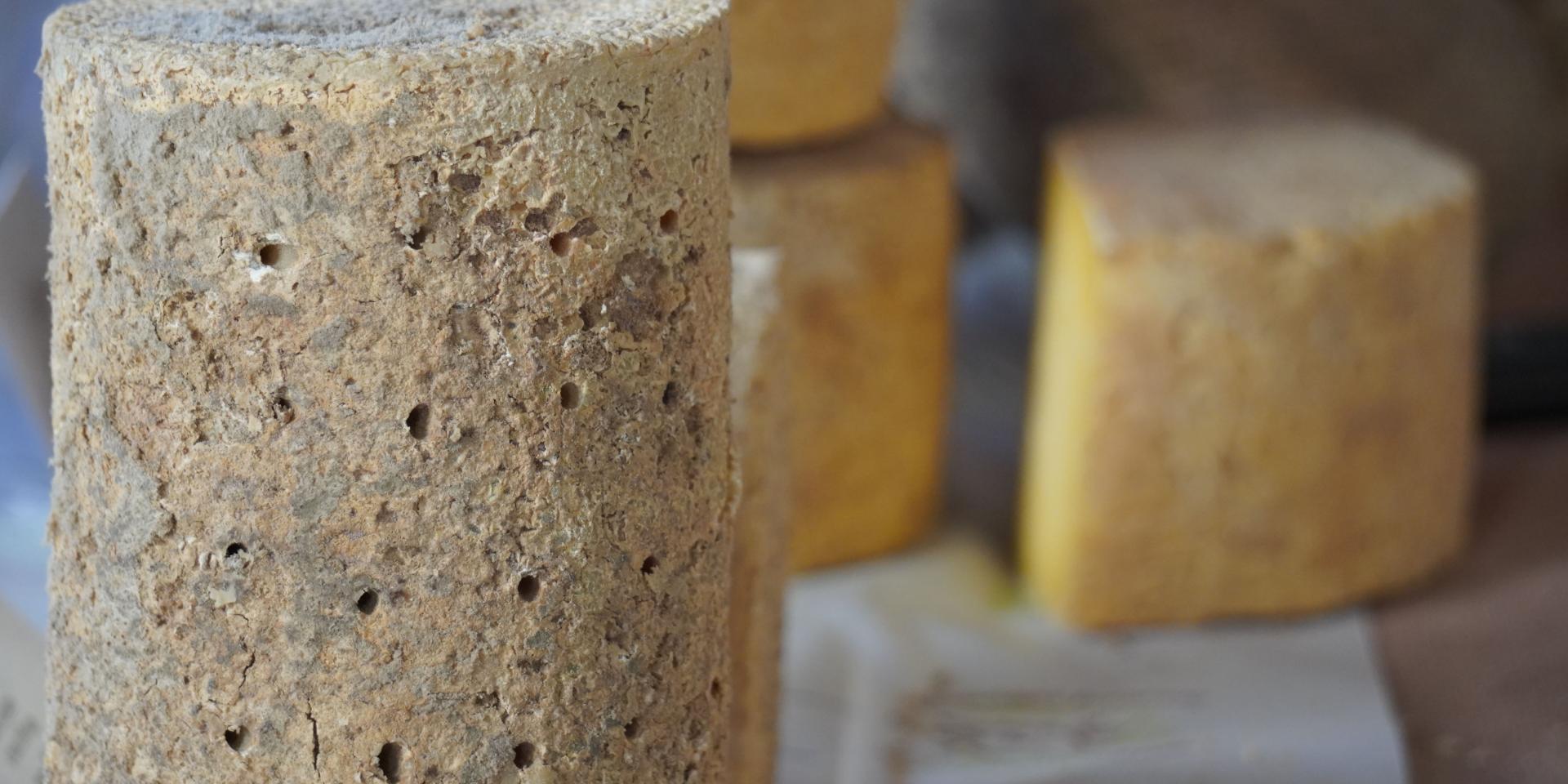
It is a blue-veined, cylindrical cheese weighing around 2 kg, about twenty centimetres high and between 12.5 and 14 centimetres in diameter. It has a fine, bloomy rind with a grey-blue tinge. The cheese is ivory-coloured, with blue flecks, known as marbling. These characteristic hollow moulds are obtained by the piquage process. The cheese is perforated to allow the air to circulate and the cheese to blossom.
The cheese has a strong reputation in the world of gastronomy, as the PDO means that Ambert is recognised as a Remarkable Taste Site and inspires many famous chefs.
Thierry Chelle, Toque d’Auvergne chef at Les Copains restaurant in Ambert, was not mistaken. 20 years ago, when he decided to take the Fourme cheese off the cheese board and into the kitchen. It’s up to you to pay him a visit and see if he’s succeeded! Thierry Chelle shares one of his favourite recipes with you on our blog. In particular, he highlights the greatest quality of Fourme cheese: its subtle sweetness, which helps to maintain the balance of flavours.
In his restaurant Les Chênes in Augerolles, chef Jean-François Fafournoux is another artist of Livradois-Forez gastronomy. What he likes best are vegetables. He’s creative, sublimating them through unexpected combinations with our Auvergne specialities. The result: incredible flavours. His son Léo, who joins him today, is carrying on a five-generation tradition.
Of course, like all the Toques d’Auvergne, of which Jean-François is President, he cultivatesextra-local, seasonal produce and links with producers.
In fact, many events celebrate this, such as the Fourmofolies in August every year in Ambert, and the Fourme Festival at the beginning of October in Montbrison. Since 2021, the FOURM’idables picnics have been held in the PDO production zone at the end of July, for tastings at altitude. Finally, from April to November, the Maison de la Fourme d’Ambert et des fromages d’Auvergne is open to visitors.
 Livradois Forez Billom 0719 300
 Livradois Forez Billom 0600 300
 Livradois Forez Fourme 1007 300
 Garlic Espirat 22
 garlic Espirat 20
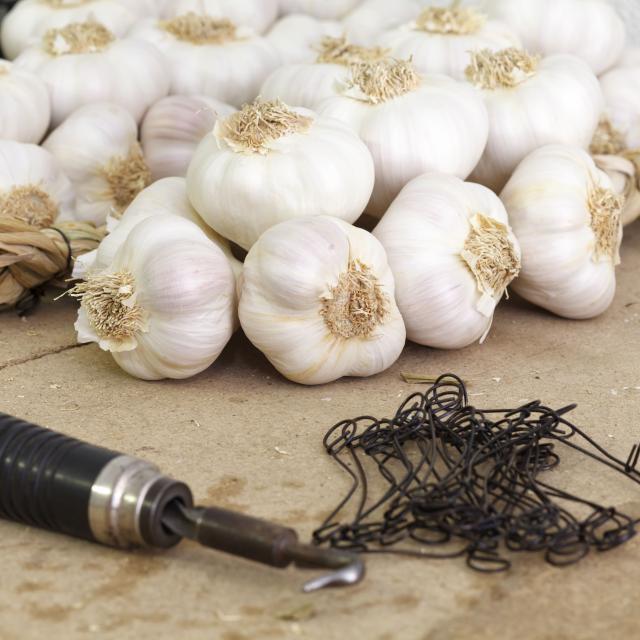
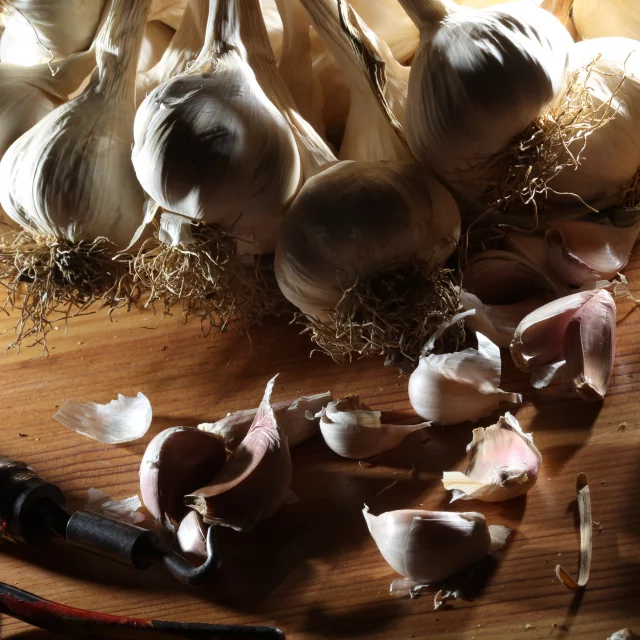
Garlic has been grown in Billom and the surrounding area since the 14th century, and the clay-limestone soils are ideal for this crop, which is listed as part of France’s intangible cultural heritage. Around twenty producers grow it in open fields and harvest it from July onwards. Then, after air-drying in the shade, the garlic is sold in braids. Annual production is around 200 tonnes. Chefs and gourmets alike appreciate this top-of-the-range bulb for its fine taste. Chefs and gourmets meet up in August for a big market at which the best cloves are traded. And at events organised for the Sites remarquables du goût. The “ Sites remarquables du goût ” label is a French brand under the aegis of four ministries: culture, tourism, the environment and agriculture.
How do you choose your garlic in Livradois-Forez?
Choose the most natural crops possible, with no anti-sprouting treatments that alter the product.
Are you petrified of having bad breath? Chewing parsley, mint or coffee beans greatly reduces garlic breath.
There is a brotherhood of Grands gousiers d’Auvergne: its members defend and promote Billom pink garlic at numerous events.
Wild bilberry,emblematic species of Auvergne
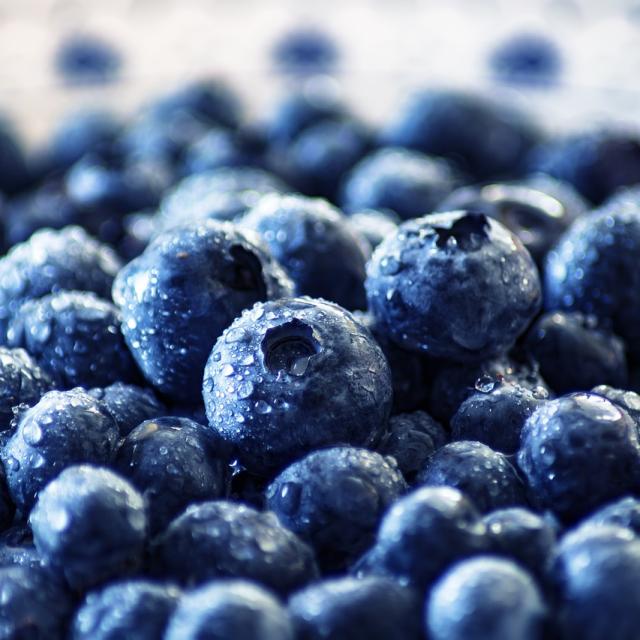
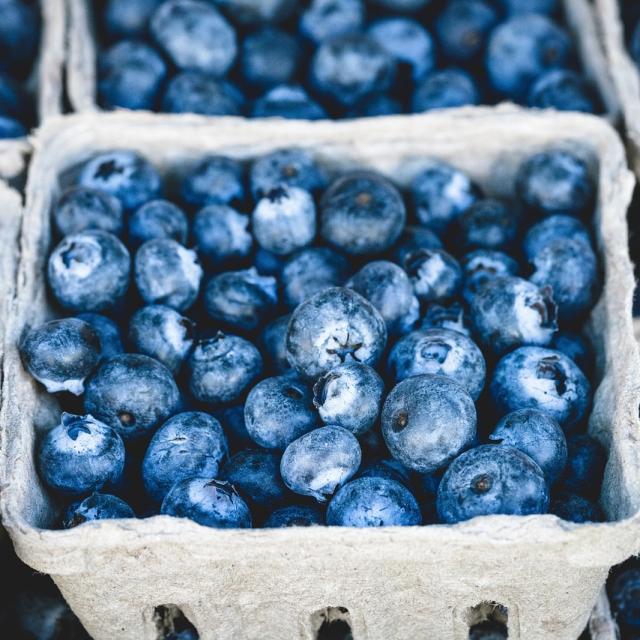
The wild bilberry, a hardy plant by nature, grows naturally in the mountainous regions of France. It grows mainly in acidic, granite soils, generally at altitudes above 800 metres and preferably with a northerly exposure. The berries ripen between July and September, producing a sweet, slightly astringent red pulp.
In recent years, it has suffered from the state of the bilberry moors, which have themselves been affected by climate change, which is encouraging the appearance of new pests. Grazing practices are also having an effect on the density of the flora.
Since 2019, the Livradois-Forez Park has been involved, alongside other nature parks in the Massif Central, in an initiative aimed at preserving and developing this emblematic resource that is the wild bilberry.
Recipe: you can try the traditional blueberry tart, but in a version inspired by Fourme d’Ambert cheese.
Specialities from Auvergne:the market ritual
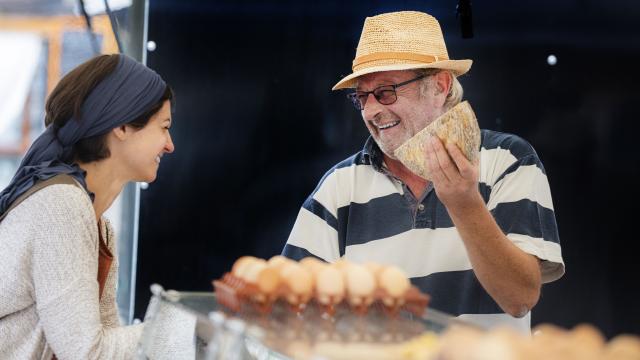
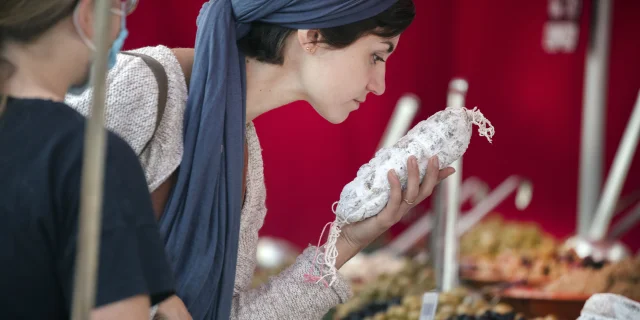
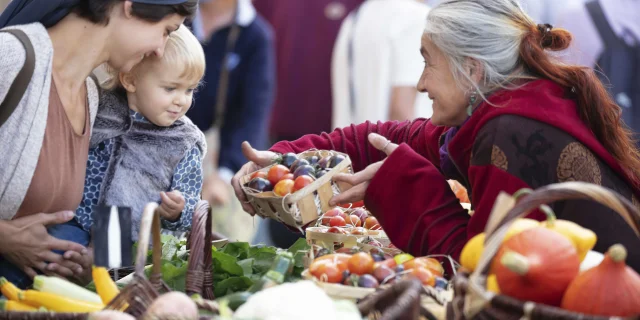
In the Livradois-Forez region, going to the market is a weekly ritual: meeting local producers who are proud of their work means forging a new relationship with food. Back in the kitchen, the food is no longer just a variety of fruit or vegetables, it’s the story or the smile of the producer you’ve visited. And going to the market means getting back in touch with the natural rhythm of seasonality. When you stroll down the aisles of a farmers’ market, you don’t leave with a predefined list: you let yourself be guided by the inspiration of the stalls. And it’s only afterwards that you can use your creativity to imagine what you’re going to cook. And don’t hesitate to ask the producers: they often have their own favourite recipes for local specialities that they’ll be happy to share. If you have a little more time and are curious to see and understand, farmers will also welcome you to their farms. If you’re an epicurean and just want to let yourself go, you can call on Mathieu Barbet. He cut his teeth at the Domaine de Codignat and is now a home chef based in Thiers. Or Nathalie and Pierre Fougère, who are gourmet caterers in Sermentizon.
At the Livradois-Forez markets, you’ll of course find seasonal fruit and vegetables on the market stalls. You’ll also find a range of homemade jams that embody the sweetness of the seasons. Strawberries, basil, black cherries from Celles-sur-Durle and delicate mirabelle plums are all in your luggage. Livradois-Forez honey, with its subtle, complex flavours, is a natural treasure that tells the story of local biodiversity. The dry sausage, mountain ham and black pudding are real treasures of authenticity, made with skills handed down from generation to generation. Olive oil, walnut oil and rapeseed oil each tell a story of fertile soil and authenticity. Precious sources of essential fatty acids, a drizzle of oil on a salad of fresh herbs and you’ve got a simple yet delicious dish. Microbreweries are also flourishing. They often choose to use locally produced cereals, wheat, rye, buckwheat and barley… Find the right addresses here: