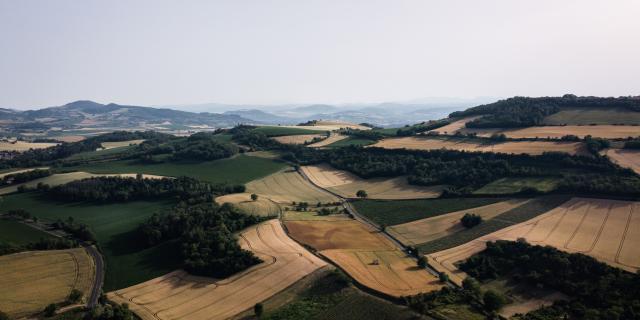
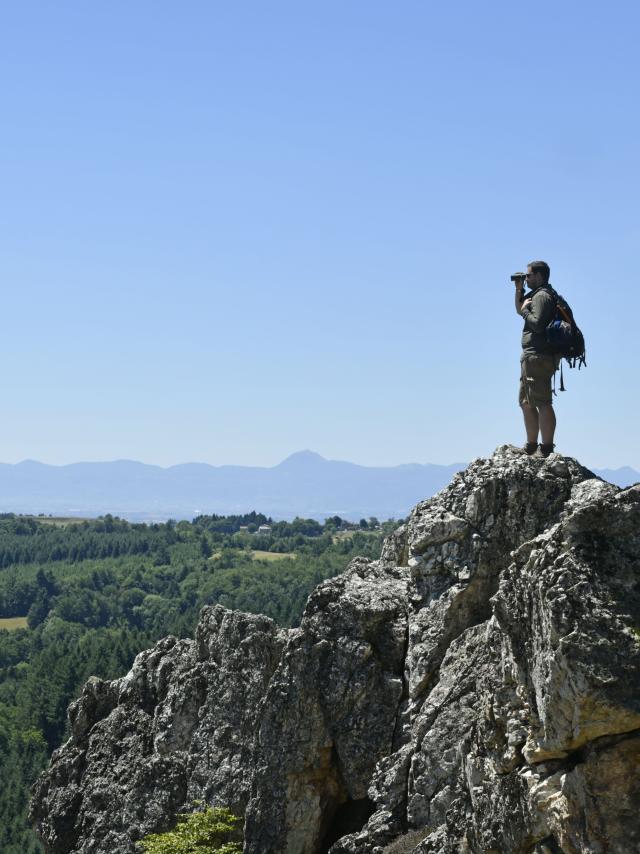
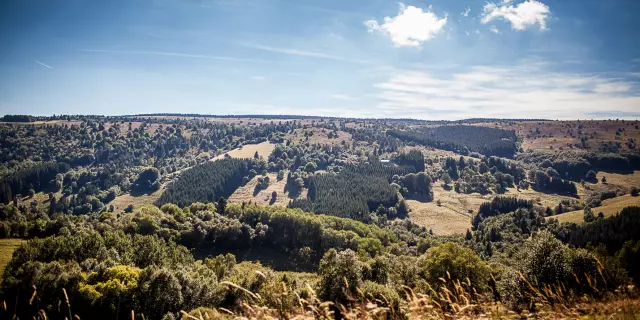
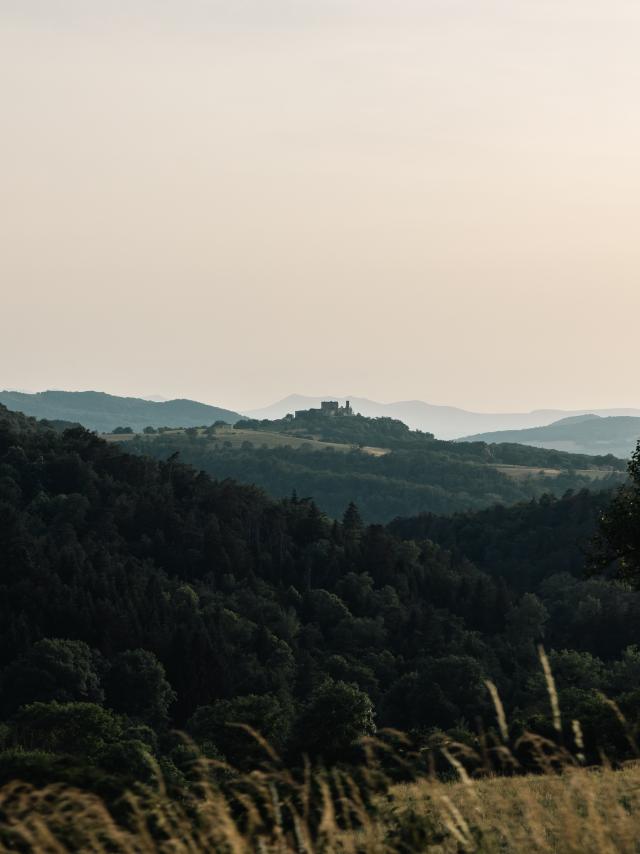
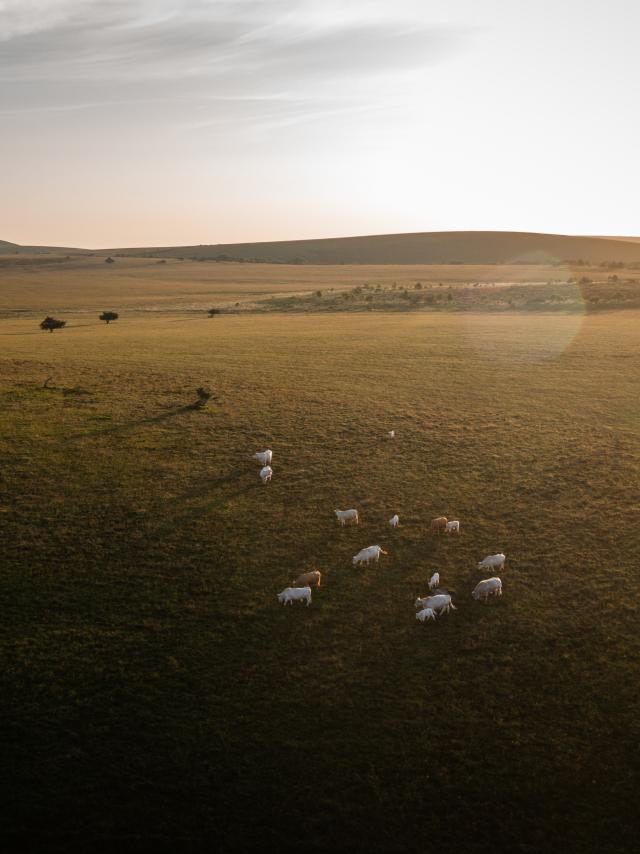
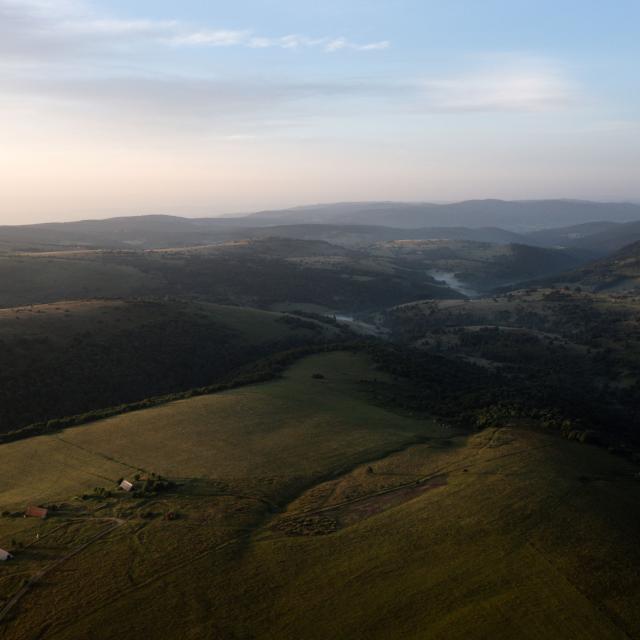
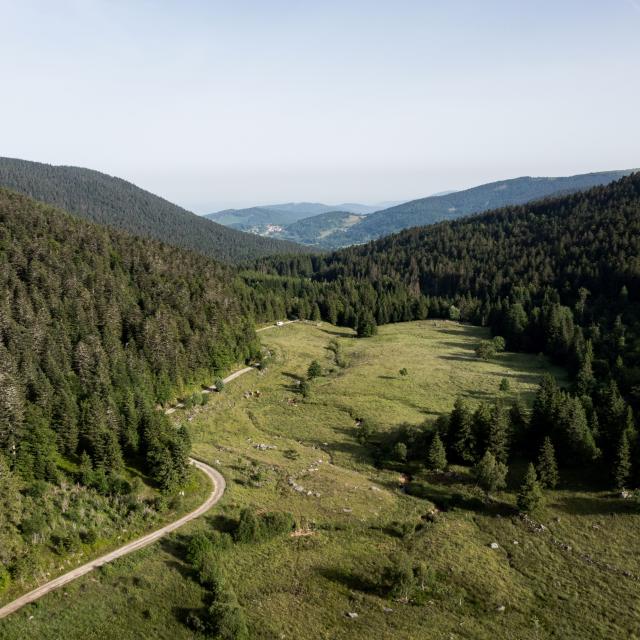
This mid-mountain region offers an ideal setting for a respectful immersion in nature. Here, the Hautes-Chaumes du Forez rise up, followed by the glacial valleys of Le Fossat and Les Reblats, and the basalt formations of the Montpeloux volcano. The Comté forest, a veritable kingdom of oak trees, as well as the Mont Bar volcano and the Rez-de-Sol add to this mosaic of natural landscapes, offering almost infinite possibilities for walks and hikes.
©
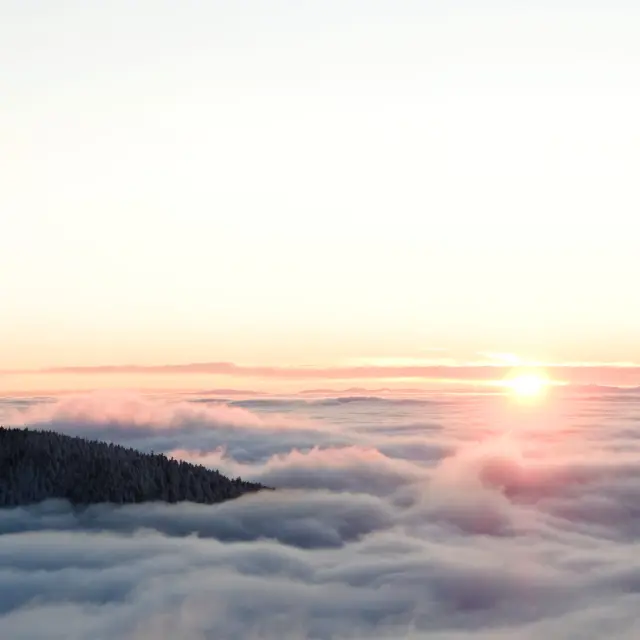
Coucher de soleil et mer de nuage en Livradois-Forez - Auvergne
Livradois-Forez Regional Nature Park
A mid-mountain regioncommitted and lively.
A walk along the footpaths offers an intimate encounter with these areas, where the Dore valley rubs shoulders with the Forez and Livradois mountains. On the horizon, the Chaîne des Puys, the Sancy and the Alps loom large, enriching the panorama. The Livradois-Forez is characterised by its ecological diversity, including peat bogs, mountain moors, alluvial forests, natural meadows and numerous watercourses. This rich ecological fabric forges the identity and unique character of the region.
The Livradois-Forez Regional Nature Park is committed to preserving this heritage, and encourages visitors to explore these natural treasures with respect. This makes the Livradois-Forez a destination of choice for ecology and sustainable tourism enthusiasts looking for authentic experiences in harmony with the environment. Visiting the Livradois-Forez means immersing yourself in a varied natural environment and taking part in its preservation. It’s an invitation to enjoy the simplicity and tranquillity of the countryside, while helping to protect it for future generations.
a natural park rich in people and heritageand its heritage
Pnr Livradois Forez Jda3889 Photo J.damase
Landscapes ALF 2
David Frobert Paysage
Saint-Julien-de-Coppel - Landscape 7- The boundaries of the Livradois-Forez Regional Nature Park
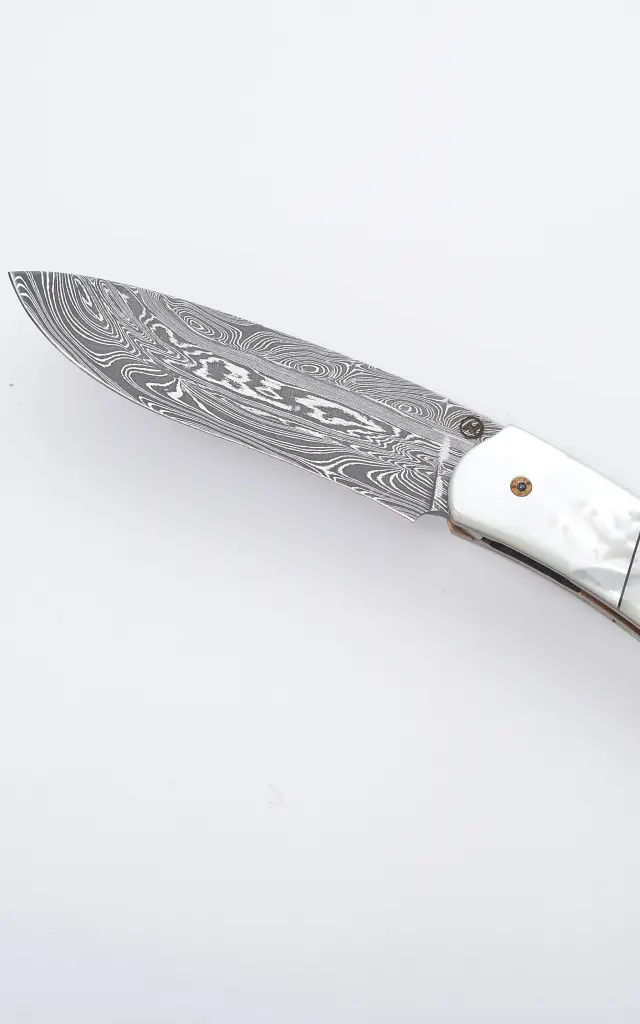
An open territory, the Livradois-Forez Regional Nature Park covers 300,000 hectares. Close to Clermont-Ferrand and Vichy, it includes emblematic places such as Thiers, capital of cutlery, Billom and its famous garlic production, Ambert with its unique town hall in the shape of a cheese, and the former Benedictine abbey of La Chaise Dieu.
Once faced with a rural exodus, the region is experiencing a revival thanks to the arrival of new residents. They are often looking for a lifestyle closer to nature.
This area, with its mix of rural character and urban amenities, is particularly attractive to those looking to get away from the big cities. Family homes, once second homes, are once again becoming primary residences, reflecting a desire to return to their origins.
For many, moving to the Livradois-Forez Regional Nature Park is a strategic move, offering a perfect balance between proximity to the south and a green setting. These new settlements are a perfect symbol of this underlying trend, the quest to reconnect with nature and a more balanced, eco-responsible lifestyle in the heart of the Livradois-Forez.
These newcomers also bring diversity and expertise, enriching the community with a fresh and eclectic dynamic. - An area of expertise

Thiers and the Thiers mountains are witness to a changing industry, still rooted in the cutlery tradition, but also turned towards other sectors such as the automotive, aeronautics and plastics industries. In Ambert and Arlanc, the traditional craft of paper and braiding has diversified to include the industrial production of cardboard and insulating sheaths, among others.
Local crafts, the beating heart of the region, express themselves through a wide variety of trades. Ceramists and leatherworkers in Thiers, lavaenamellers in Billom, pencil and basket makers in Olliergues, illustrators and paper makers in Ambert, wood carvers in Beurières, lace makers and wood turners in Arlanc: these craftspeople share a common commitment to preserving traditional techniques as part of an eco-responsible approach. Together, they form the Route des Métiers, a route that invites visitors to discover their workshops and their unique skills, in a spirit of sustainable tourism that respects the environment.
Natural treasurespreserved and diversified
The Livradois-Forez region, in France’s Massif Central, was formed millions of years ago. Its genesis is linked to major geological phenomena, in particular the folding of the Alps, which shaped its relief and valleys. During the Paleozoic era, around 300 million years ago, this region was part of the Hercynian chain, a huge mountain range.
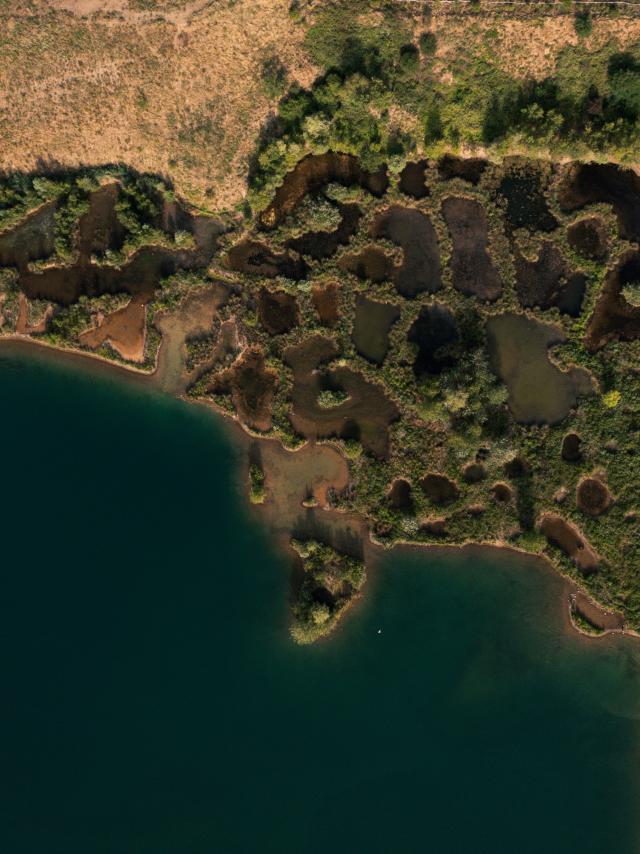
Livradois-Forez is also characterised by its geological diversity. It is home to a variety of rocks that bear witness to its turbulent history: gneiss, granite, basalt and many others. The region is volcanic, and preserves the traces of these turbulent times. One of the most beautiful sites in France, to the south of the park, is home to a volcano hiding a peat bog in its crater: Mont Bar, near the commune of Allègre.
These rock formations, combined with the richness of the flora and fauna, make this region a special place for lovers of nature and geology.
Did you know that?
At the time, the Hercynian chain rivalled theHimalayas in size. Imagine these gigantic mountains rising up where there are hills and plateaux today. Over time, erosion has transformed this monumental landscape into the gentle mountains, dense forests and valleys we know today in Livradois-Forez.
Livradois-Forez Nature Park :a vast secret territory
The Livradois-Forez region, designated a Regional Nature Park in 1986, represents a delicate balance between economic, social and cultural development and respect for the environment. This area, rich in biodiversity and natural landscapes, places great emphasis on preserving nature and its diverse flora and fauna.
The people of Livradois-Forez have managed to preserve the traditional techniques of many trades, such as papermaking, cutlery, weaving and the production of Fourme d’Ambert PDO cheese. These ancestral skills, which bear witness to a rich agricultural and industrial history, coexist today with dynamic and innovative industries. Despite the rural exodus and the reduction in agricultural activity, the region retains a strong forestry presence, covering half of its surface area. Textiles, leather, paper and light metallurgy, present since the 15th century, continue to shape the character and culture of the area. The Livradois-Forez is home to a varied architectural heritage, ranging from craft buildings to religious and agricultural buildings, scattered around small hamlets and towns.
Despite its accessibility, the park requires rigorous protection to preserve its beauty and appeal. Strict regulations and the classification of certain sites as Espaces Naturels Sensibles and Natura 2000 support biodiversity while integrating human activities.
The use of pisé, an ancestral building technique, is particularly notable in Livradois-Forez. Despite the decline of this method in favour of concrete and other modern materials after the 1950s, there has been a revival of interest in pisé. Residents and craftsmen now recognise its ecological, economic, social and cultural advantages . Innovations in adobe construction techniques offer solutions adapted to contemporary requirements, while preserving the region’s unique identity and architectural heritage.
Dji 0373

It's up to you to tryin Livradois-Forez
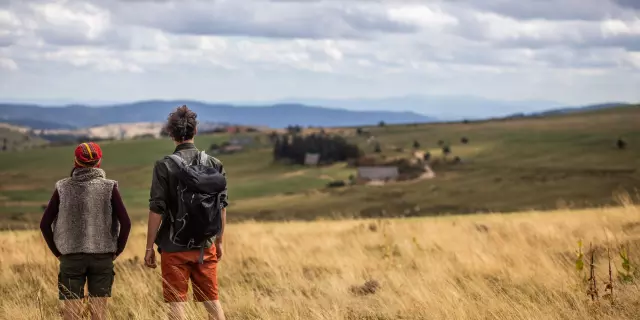
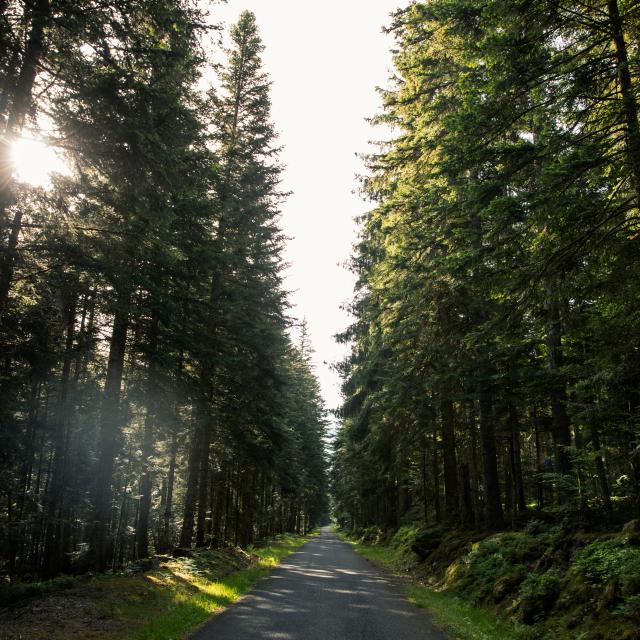
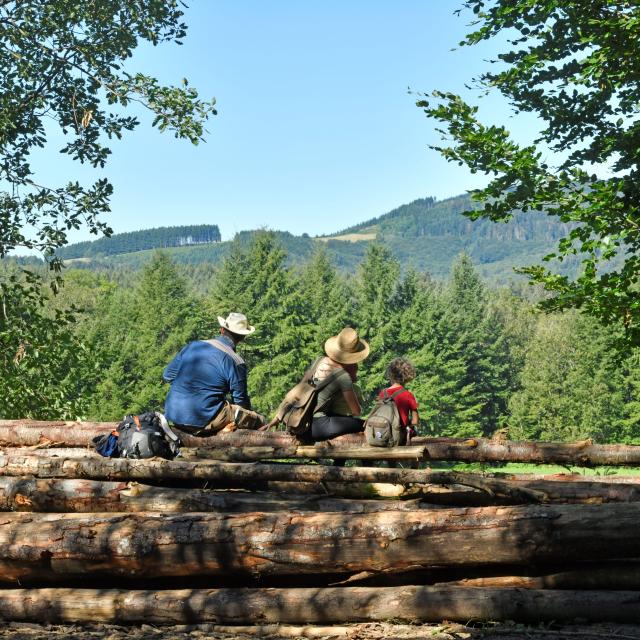
Explore this vast natural area at your own pace. Here, trails wind through varied landscapes, inviting families, friends and couples to explore at their own pace. Hikes through forests, valleys and peaks offer moments of discovery and tranquillity.
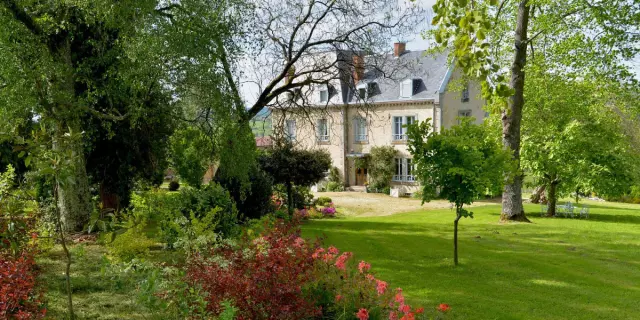
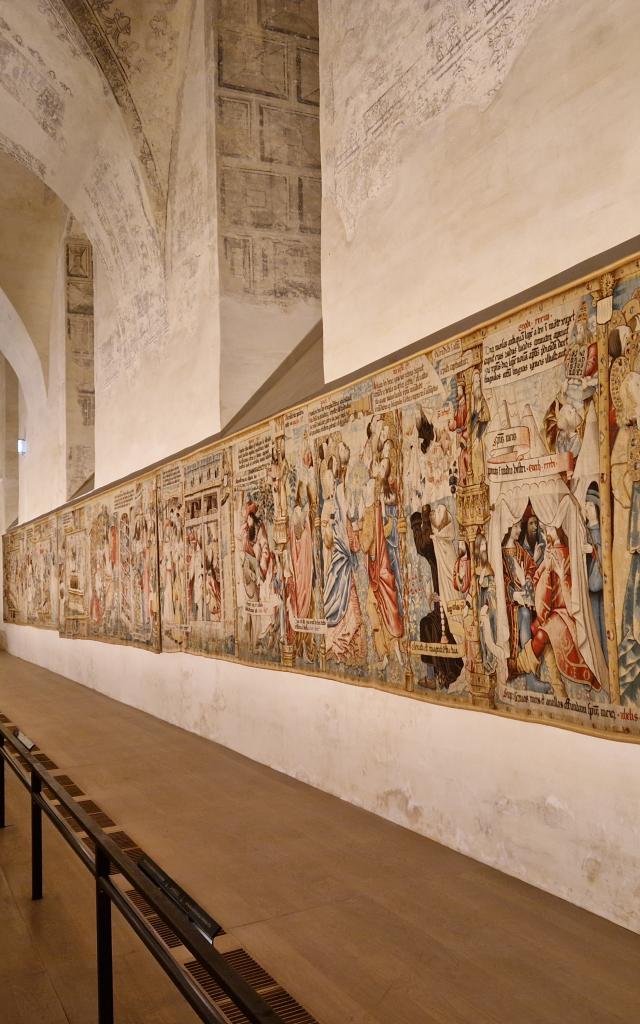
The region’s villages, châteaux and museums all tell a story of tradition and craftsmanship. It is a meeting place for those seeking to connect withlocalhistory and the skills of craftsmen.
Whether you’re looking for peace and quiet, nature or cultural discoveries, the Livradois-Forez offers a range of activities to suit everyone. Let yourself be guided by the beauty of its landscapes and the richness of its heritage for an authentic and memorable experience.