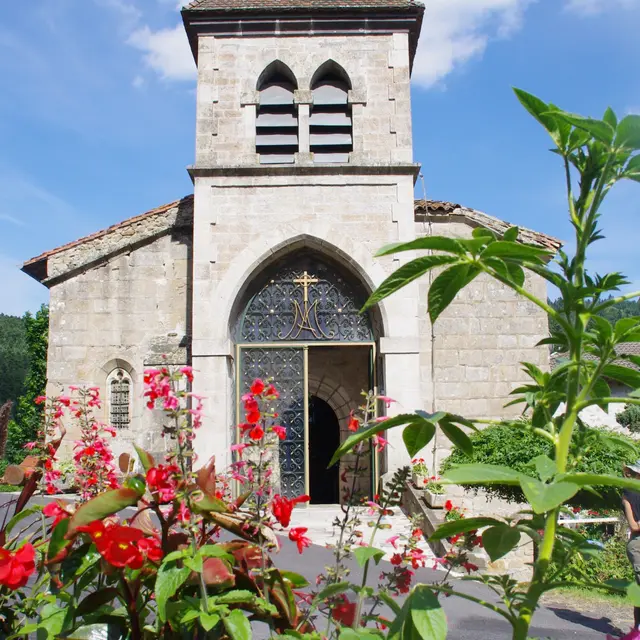
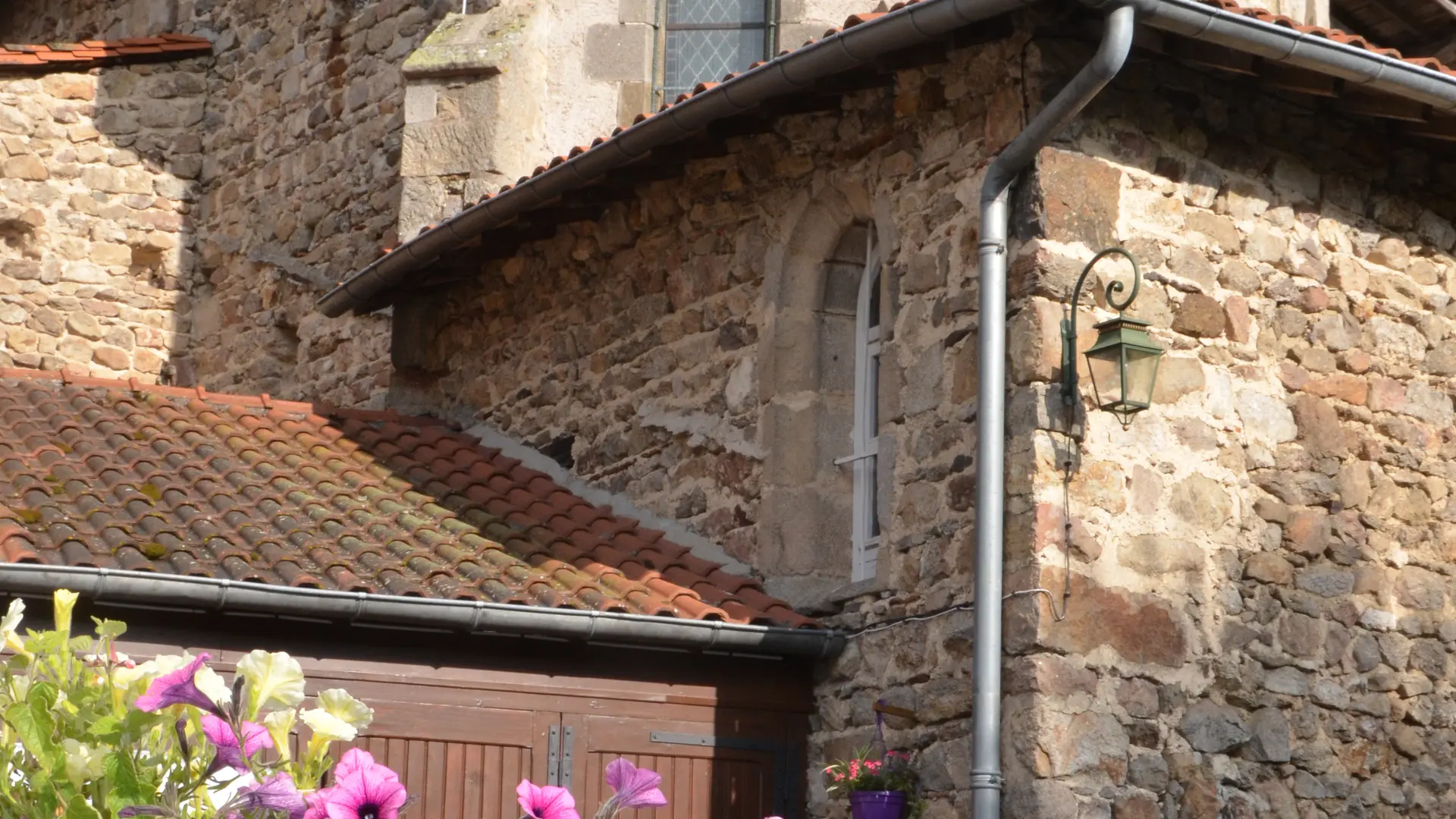
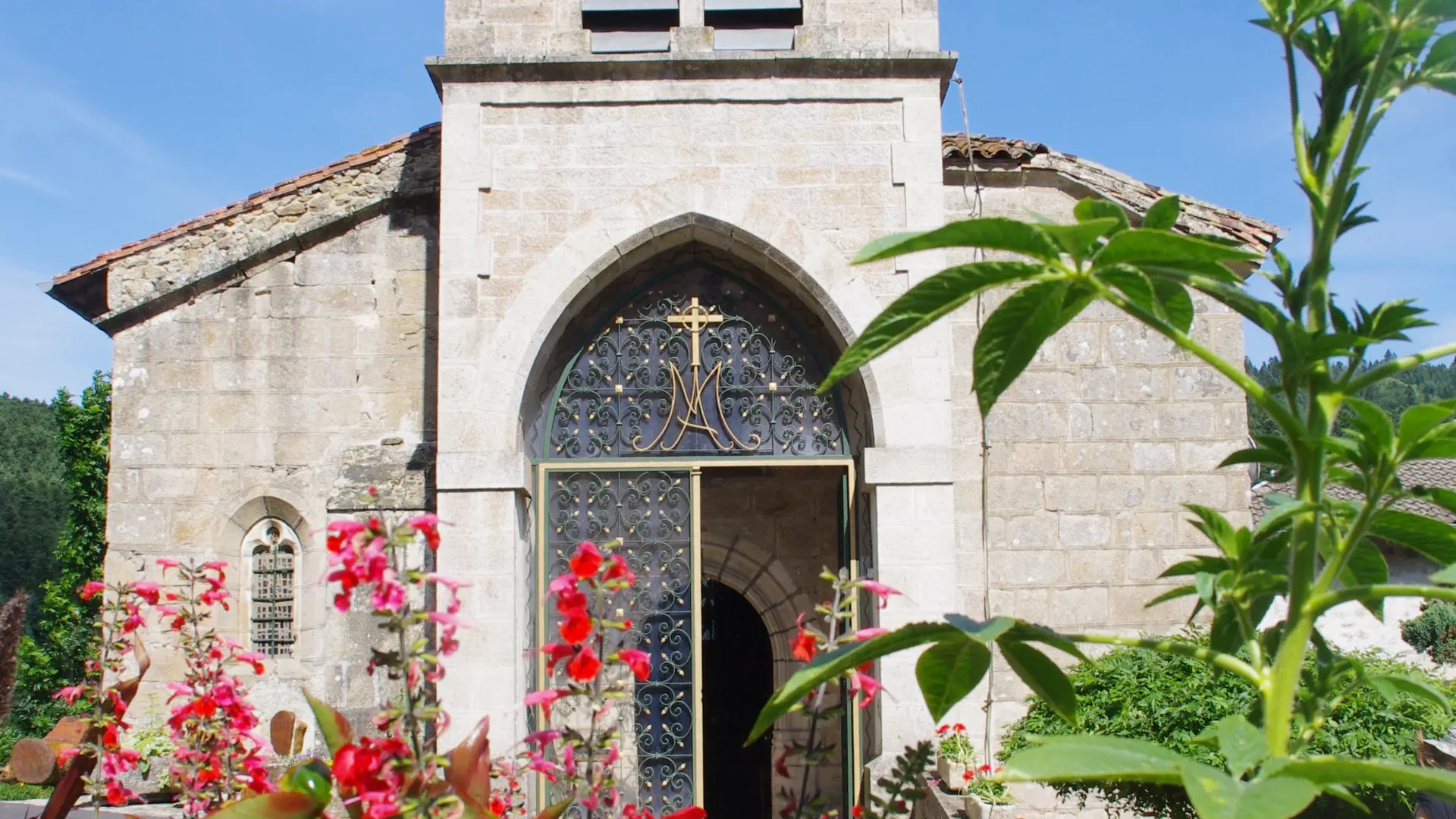
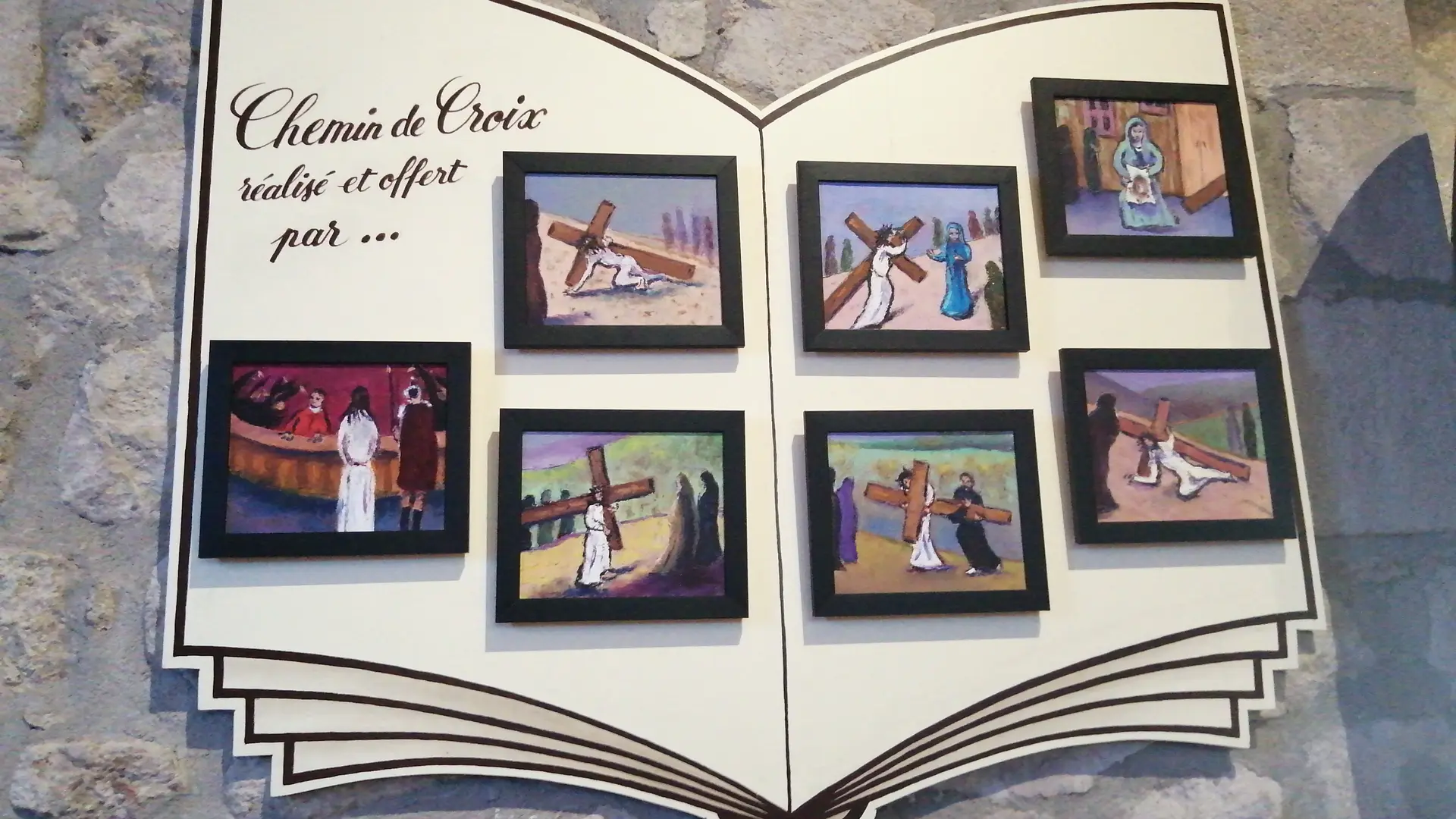
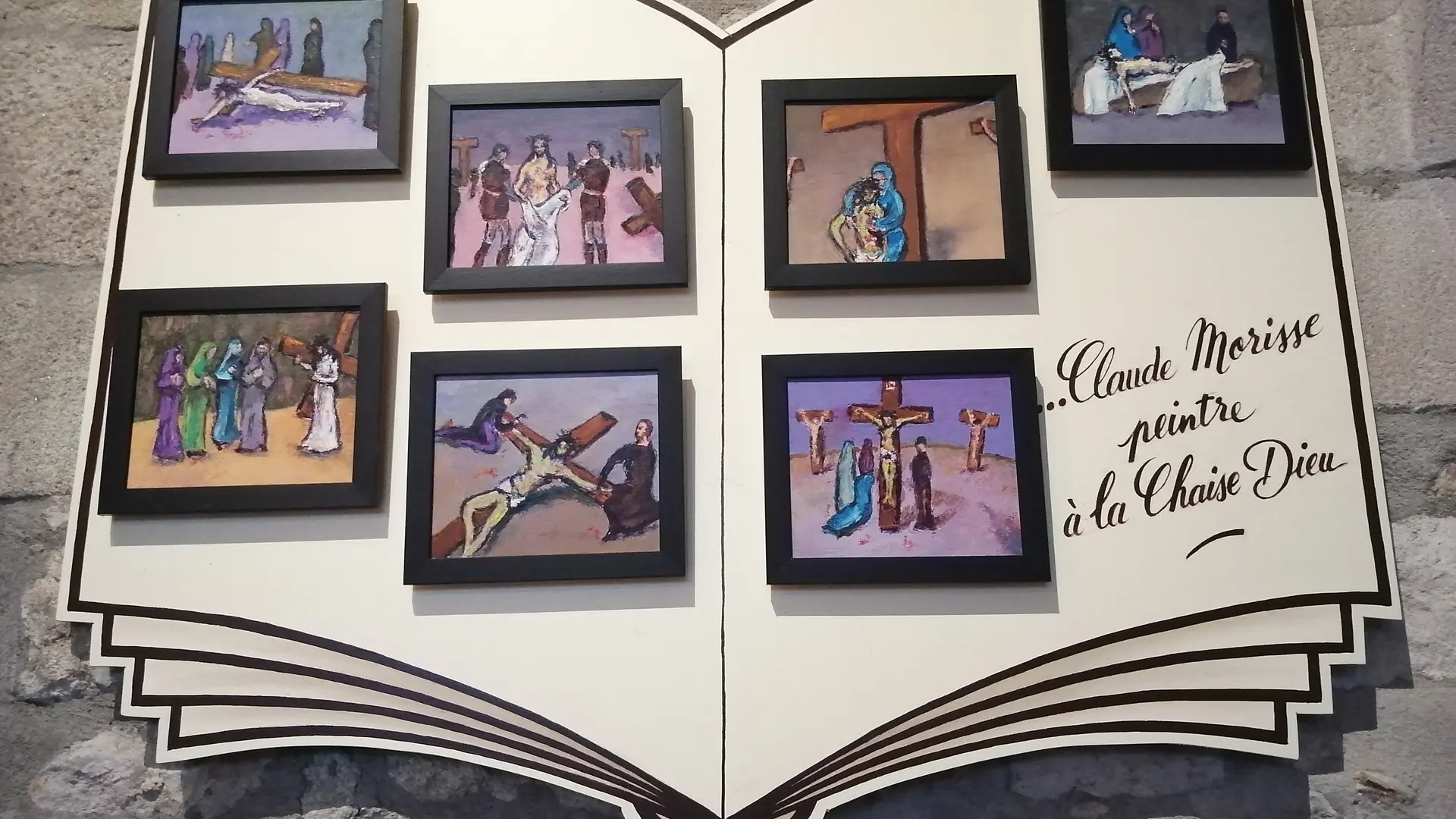
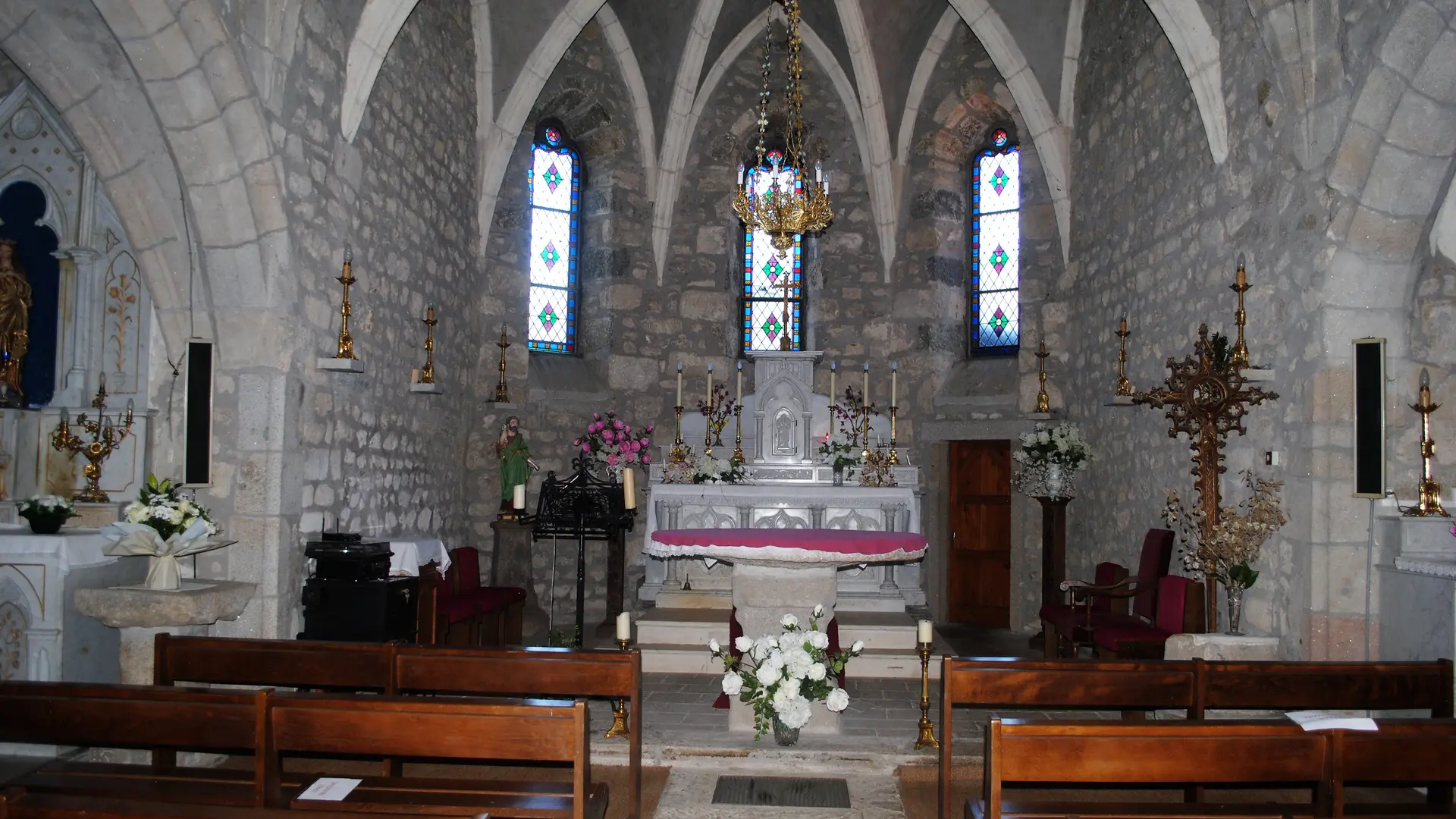
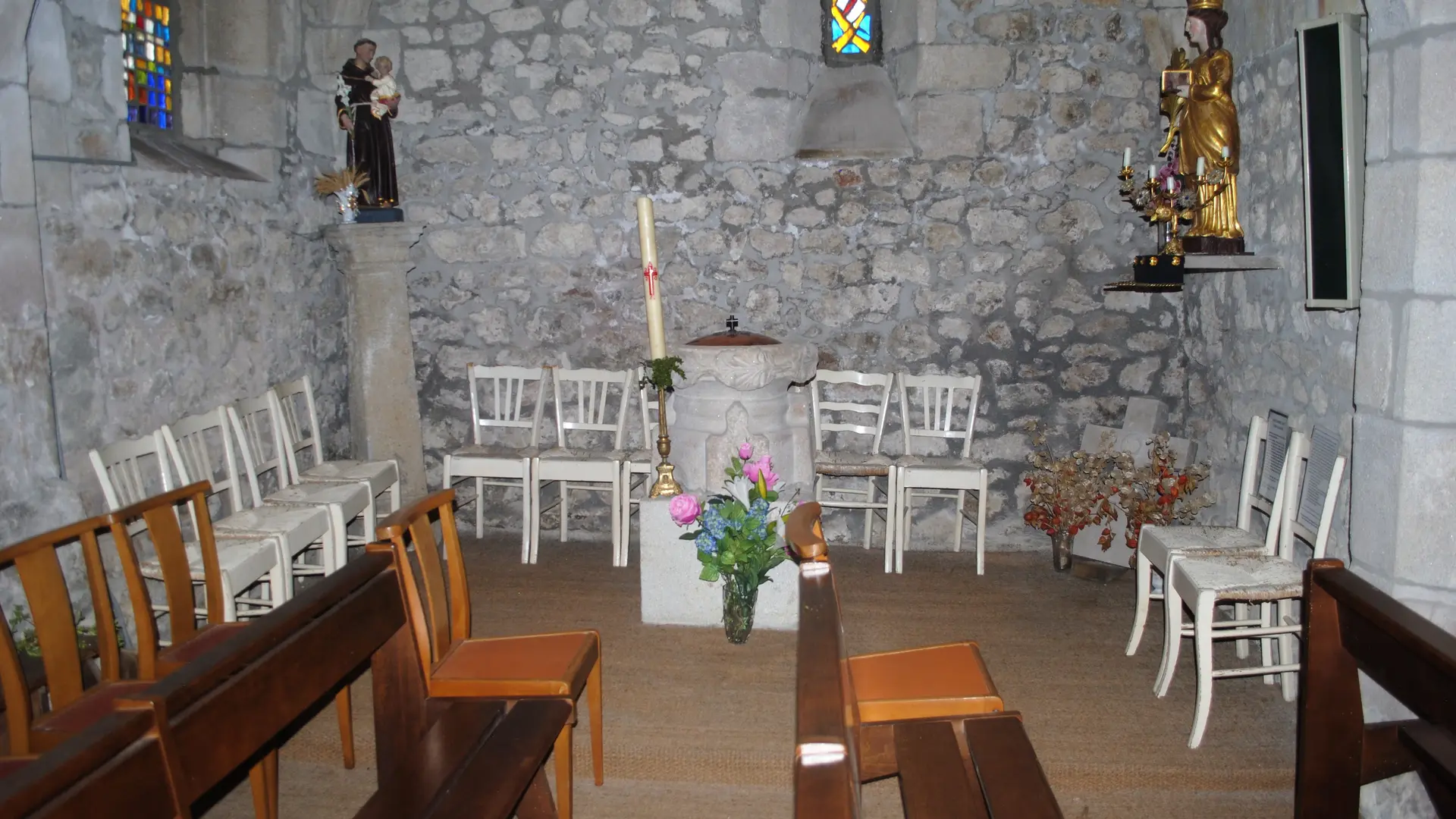
A parish church dedicated to Saint Eugénie, renovated in the 1980s.
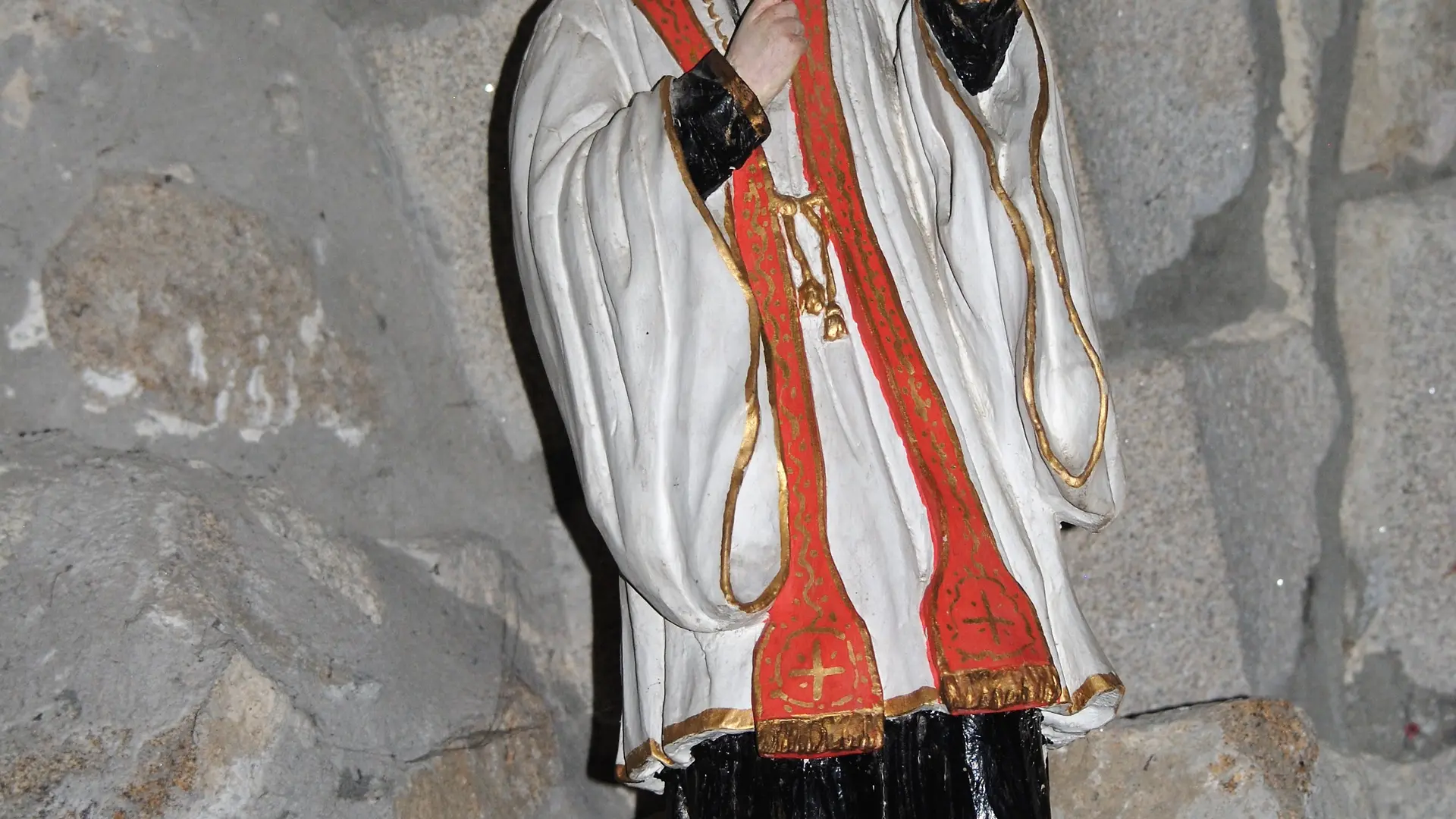
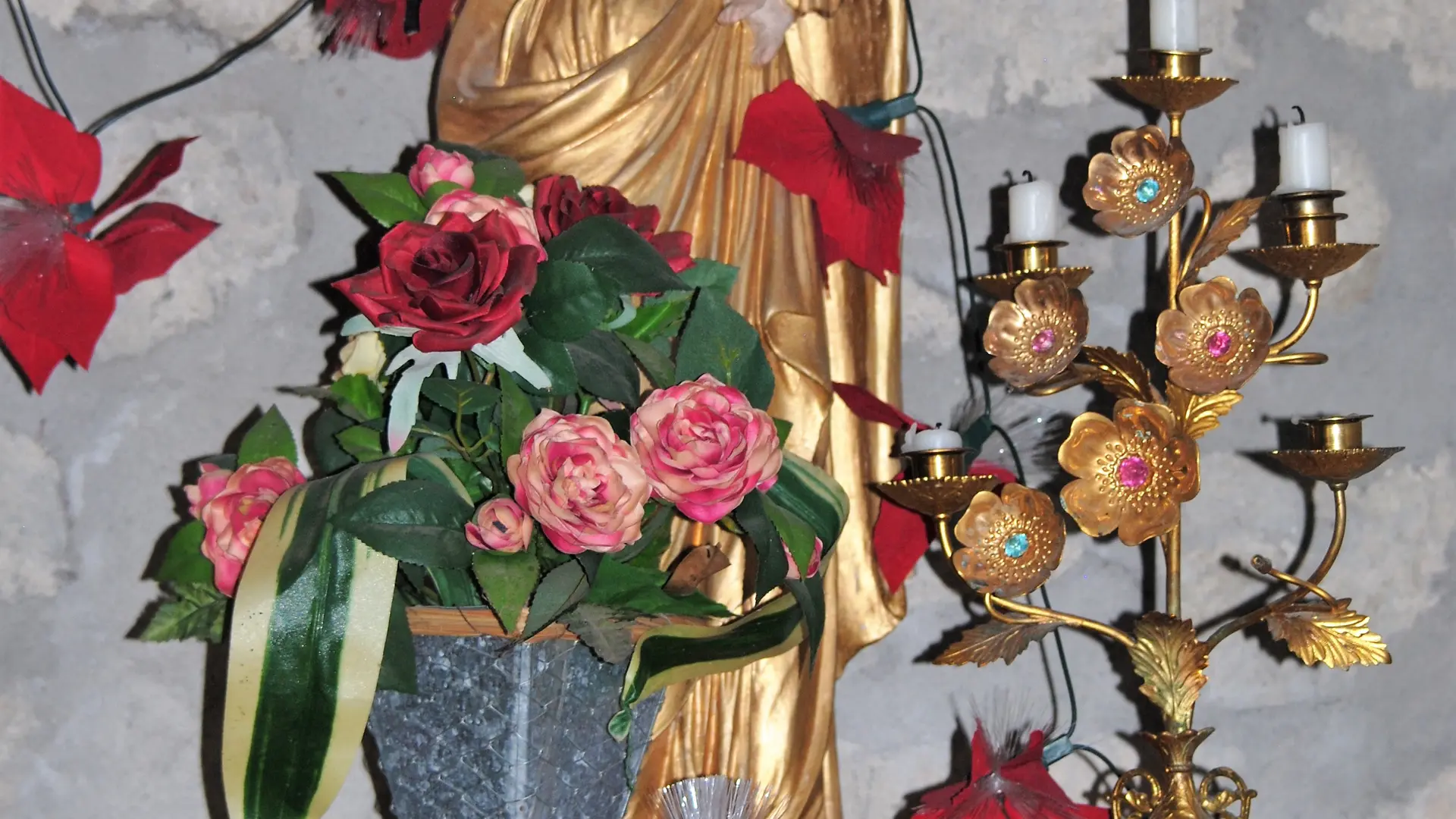
Eugenia was a Roman virgin who was martyred during the reign of Emperor Valerian. According to her “Passion,” she was the daughter of Philip, governor of Alexandria. She disguised herself as a man so she could enter a monastery, where she became abbess. Accused of seducing a woman, she was summoned to appear before Governor Philip, her father, and proved her innocence by revealing her identity. Her father converted, but she had to return to secular life, where she influenced society through her way of being and thinking. However, many were displeased with this influence and sought to kill her in various ways (by burning her, drowning her, starving her), to no avail. Eventually, she was beheaded. Her symbol is the branch, which she holds in her right hand (here it is missing).
Bonneval is a former priory of Benedictine nuns, first mentioned in 1177, under the jurisdiction of Lavaudieu. The first church was built in the 13th century.
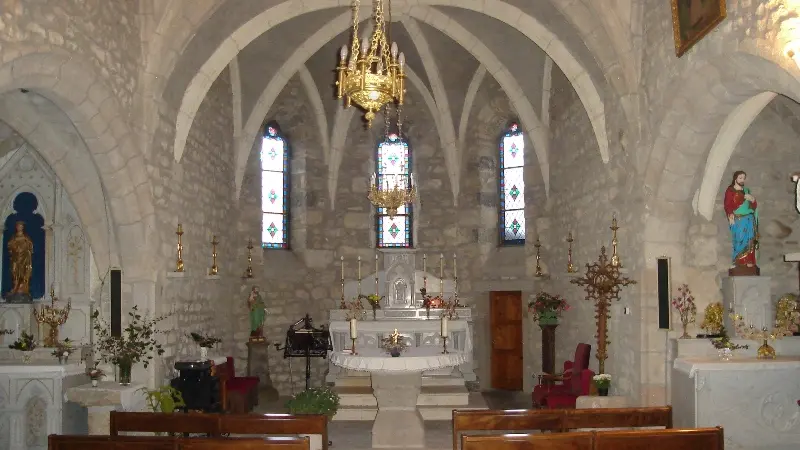
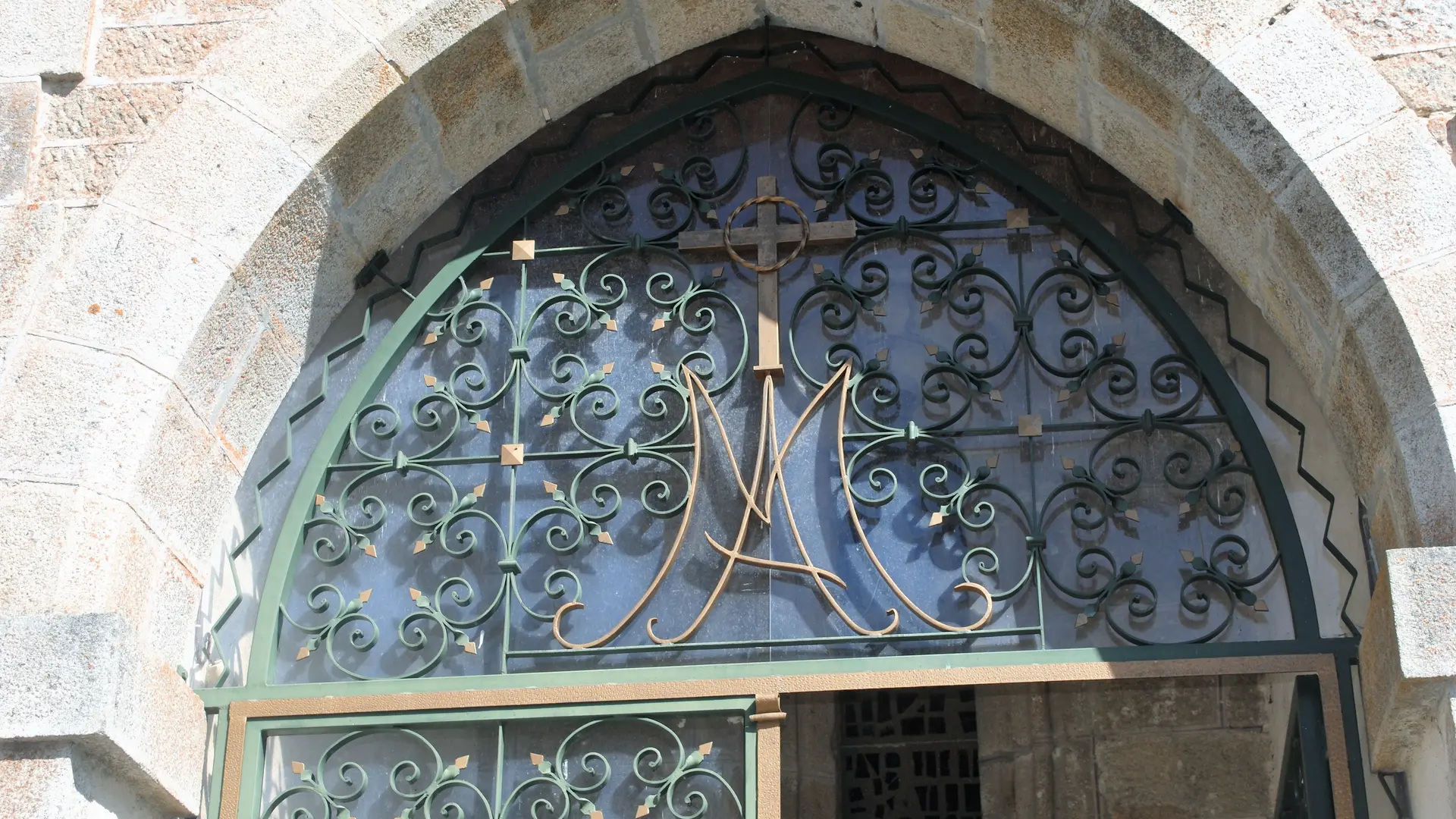
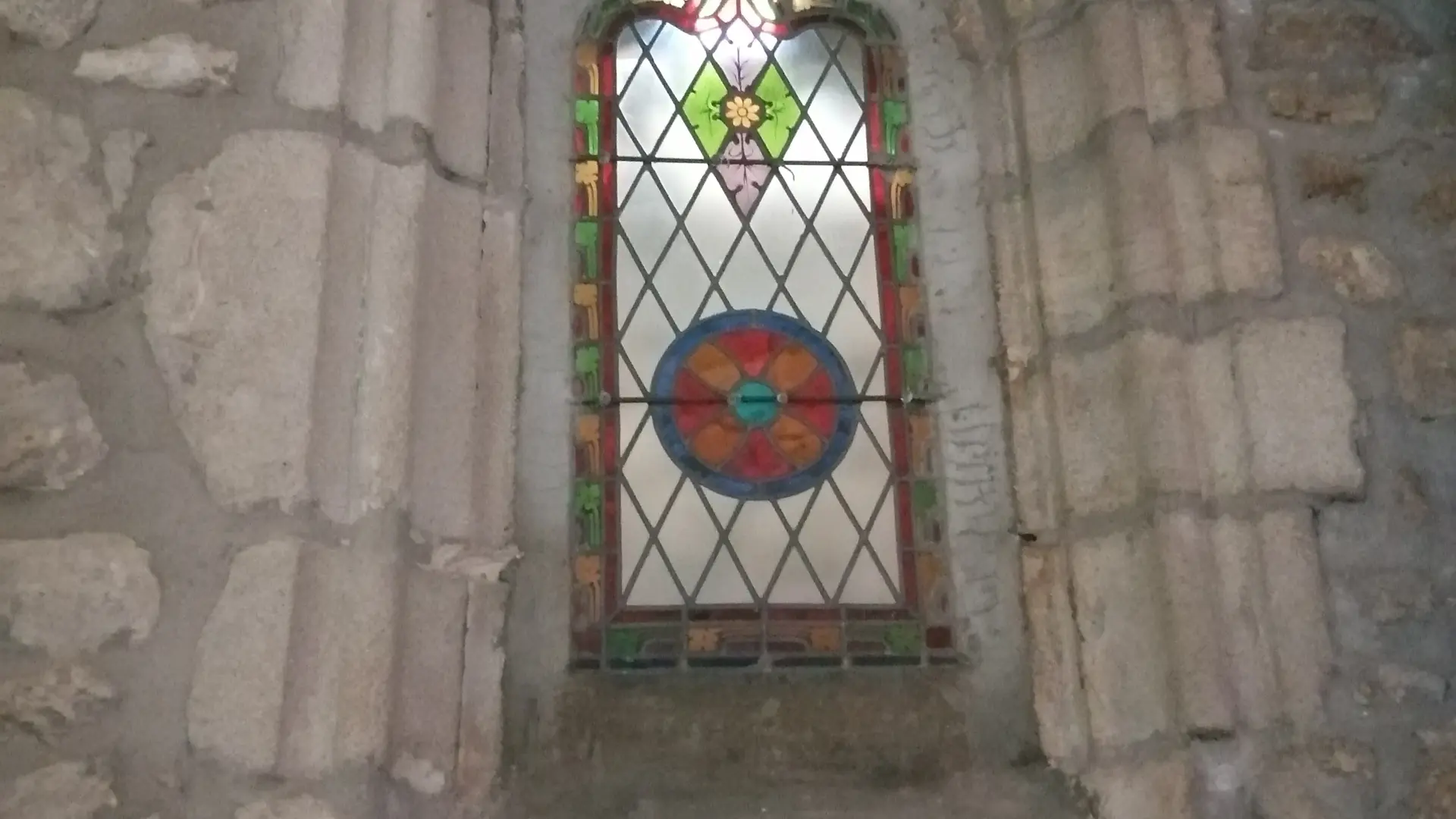
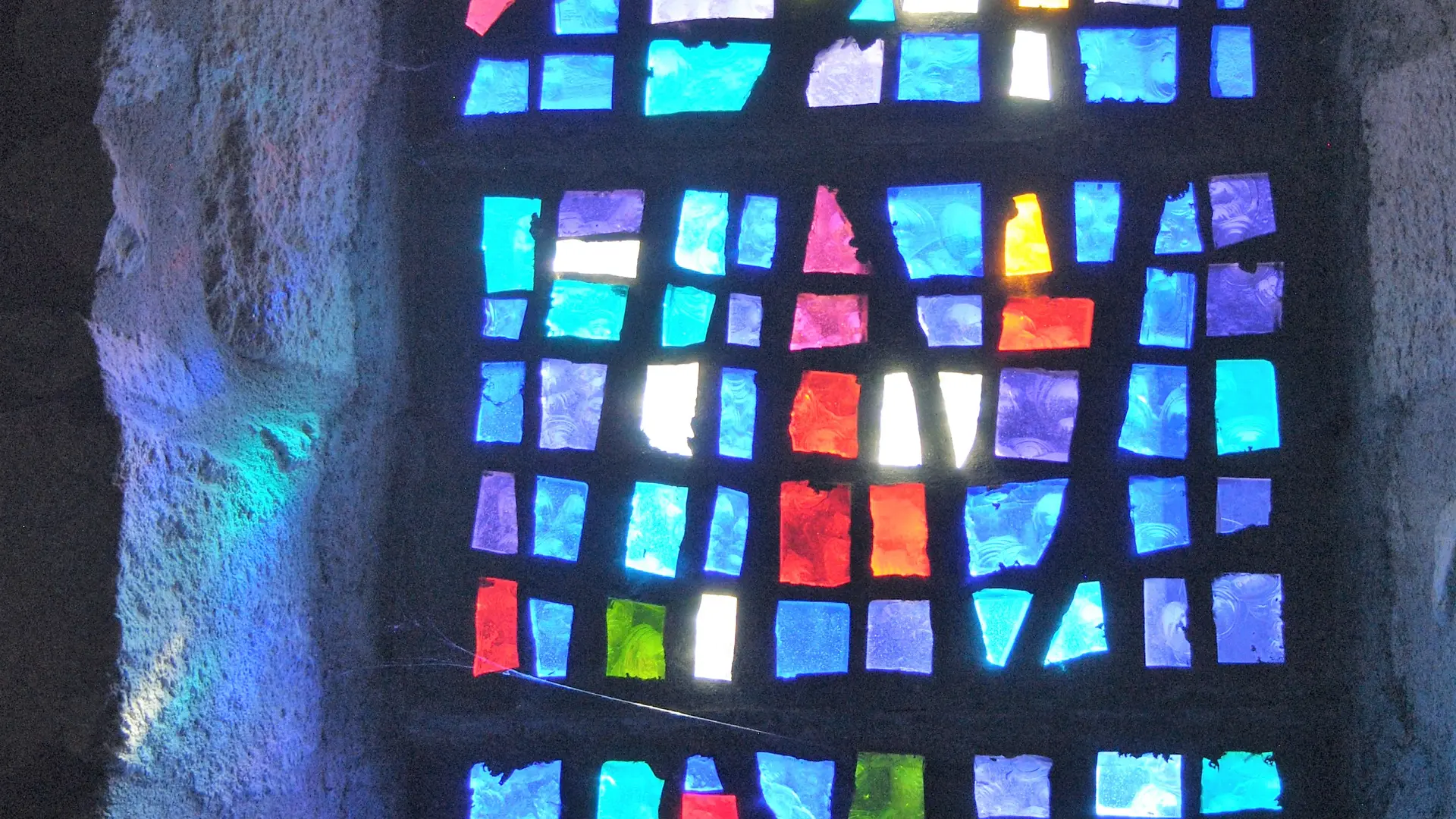
The central nave is flanked by four side chapels, which are set back from the nave. The nave, choir, and chapels feature ribbed vaults with keystones adorned with coats of arms (Gothic letters “M”). The stained-glass windows are modern. The bell tower-porch dates from 1908.
In 1993, murals were discovered on the walls of the chapels: a Crucifixion from the late 16th century behind the statue of St. Eugenie in the first chapel on the left as you enter. and in the next chapel, a depiction of St. Christopher carrying the Infant Jesus (from the same period).
The altar table is a millstone from the Pissoux mill.
Tips
Starting point for numerous hikes, including the PR44 and PR46, which are part of the “Respirando” trail network