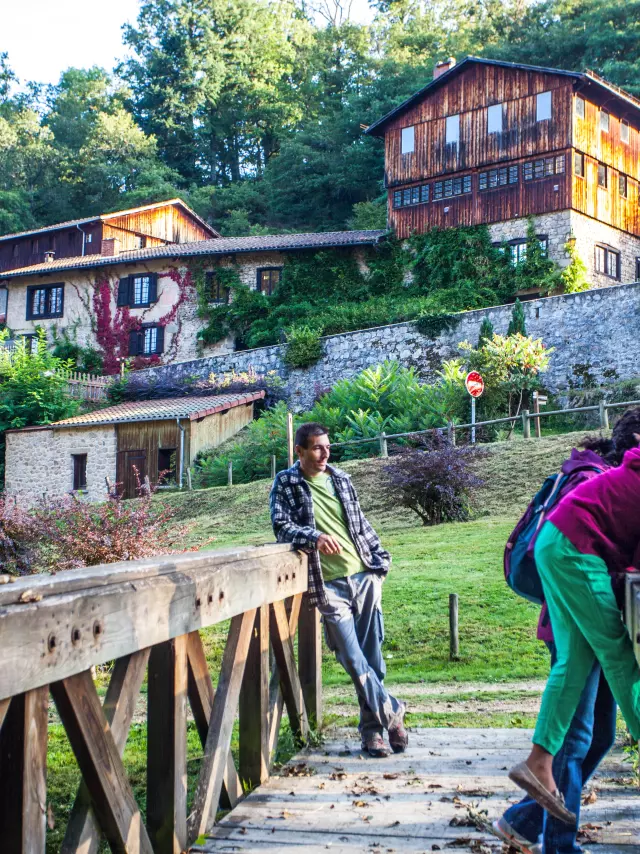
 Moulin Richard de Bas - General view
 Green Geometric Blank A4 Document Landscape 4Moulin Richard de Bas - General view
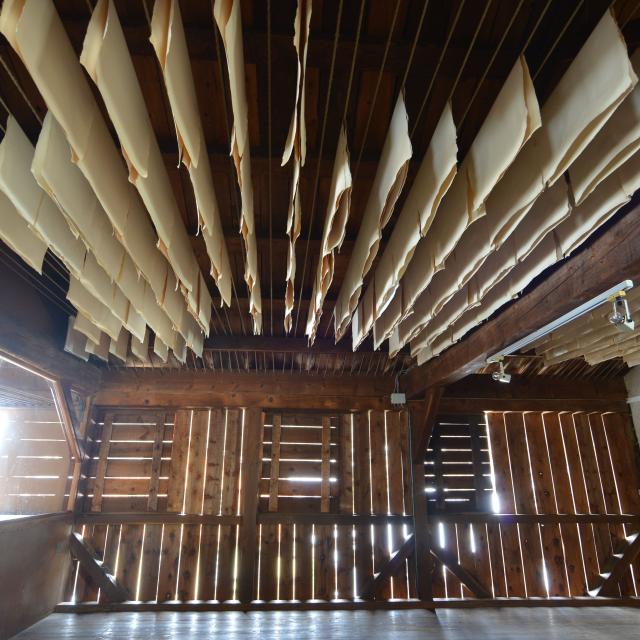
The Richard de Bas paper mill is a hidden treasure nestling in the heart of the Dore valley. This mill stands as the oldest in France, a living monument that has stood the test of time. Just imagine that in the 17th century, this valley was dotted with almost 400 mills, makingAmbert a nerve centre of the paper industry.
This profusion of mills not only shaped Ambert’s economic and cultural importance, but also shaped the very identity of the region. Today, the Moulin Richard de Bas stands out as the sole survivor of this bygone era.
The architecture of the Moulin Richard de Bas, with its large wooden wheel powering the production process, is a masterpiece of engineering from the past. The simplicity of the structure is a testament to the region’s rich rural heritage. Despite the advent of modern techniques towards the end of the 18th century, the mill has preserved its original mechanism. It offers visitors an authentic insight into the art of ancient paper-making.
Today, the mill is not just a historic site, it’s a centre where old-fashioned papermaking is celebrated, using techniques that honour time and craftsmanship. The Ferris wheel still turns, powered by the waters of the stream, and visitors are invited to take part in workshops to create their own sheet of paper, perpetuating the paper-making tradition. With 40,000 visitors a year, the Moulin Richard de Bas remains a place of learning and discovery, a gateway to a world where past and present meet in harmony.
La Chaise-Dieu Abbey is a sanctuary of history and spirituality in the heart of the Auvergne. It’s a must-see for anyone travelling through the Livradois-Forez Regional Nature Park.
This abbey, founded on the ruins of theCasaDei monastery in the Middle Ages, has become a symbol of the region’s cultural and spiritual wealth. The village of La Chaise-Dieu, though small in size, is big in heritage.
As you approach theAbbayede la Chaise-Dieu, you will immediately be struck by the scale of its Gothic architecture, reflecting the grandeur of the medieval era. The Abbey is home to treasures such as the tomb of Pope Clement VI and the unique Danse Macabre, with its 144 carved oak stalls.
The Abbey’s interior is dominated by majestic organs, restored to sublimate the sacred music and artistic history of the Abbey. These instruments are at the heart of the La Chaise-Dieu Festival, an event devoted to sacred and classical music.
La Chaise-Dieu Abbey is also home to precious Flemish tapestries, testifying to the finesse of 16th-century Flemish art. After a delicate restoration, they are now on display in a refurbished space that respects their historical importance while meeting today’s conservation needs.
 887a5957
 887a5962
 887a5990
Thiers is known as the international capital of cutlery. It is a town steeped in tradition dating back over seven hundred years, situated in the Durolle Valley. The historic heart of Thiers, with its steep medieval streets and ancient buildings, is steeped in the charm of yesteryear. The town’s characteristic vaulted passageways lead strollers through a labyrinth of craft shops.
A first stop not to be missed is the Musée de la Coutellerie. The history of knife-making is told through exhibitions and demonstrations by expert craftsmen. By displaying an impressive collection of knives, from the most traditional to the most modern, this museum highlights the evolution of the cutler’s trade and the importance of Thiers in this field through the ages.
For those keen to experience the craft of cutlery in a more hands-on way, you can take part in a knife-making workshop. It’s an opportunity not to be missed! Establishments such as Inserfac or Robert David Cutlery offer sessions where participants can assemble and personalise their own knife. These workshops allow participants to discover the creative process, from polishing to engraving.
This is your chance to take home a unique and personal souvenir.
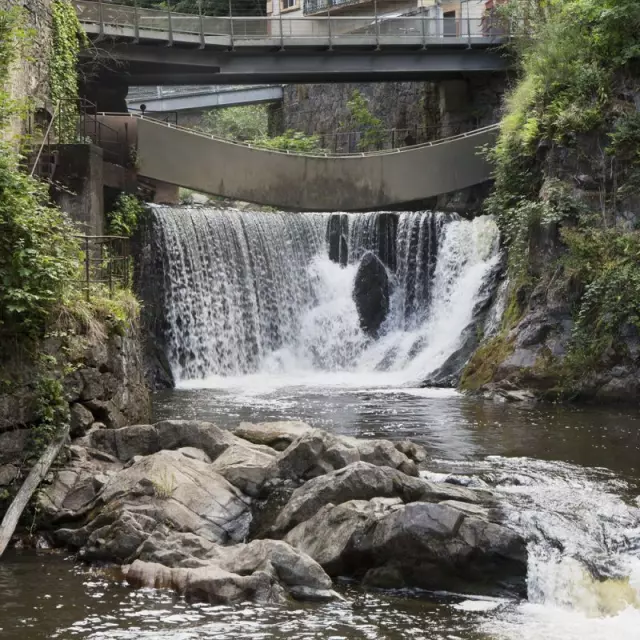
A visit to Thiers would not be complete without a walk through the Vallée des Rouets. This walk offers an insight into the historic use of the Durolle ‘s hydraulic power for watermills. They bear witness to the region’s formercutlery industry. For lovers of nature and history, the “From Hell to the spinning wheels” walk is an adventure where natural landscapes mingle with industrial remains.
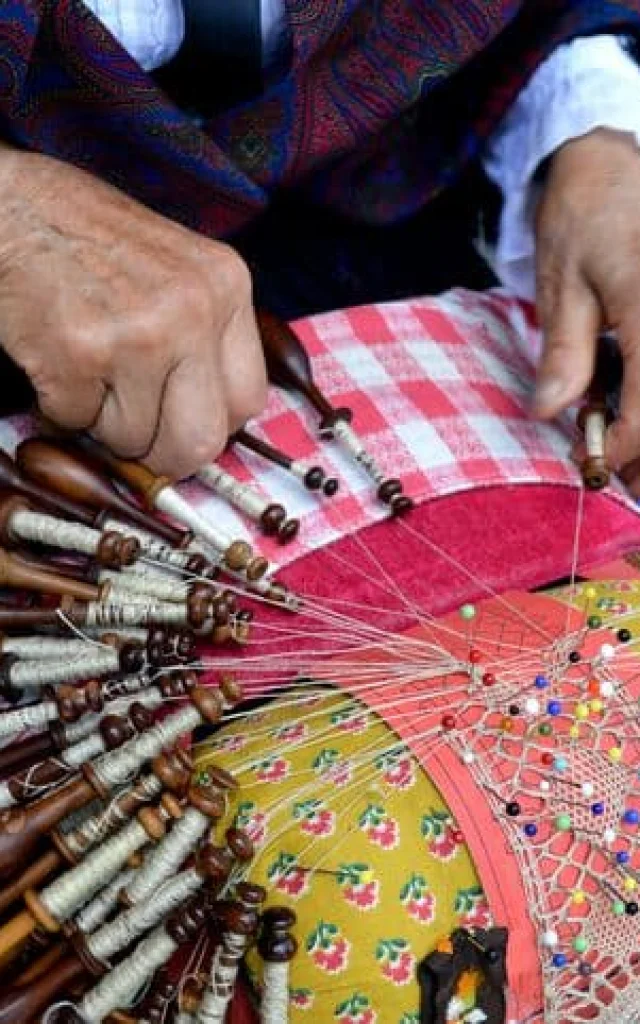
Located in the heart of the charming town ofArlanc, this museum, housed in the vaulted rooms on the ground floor of the Hôtel de Ville, reveals the finesse and elegance of Arlanc lace. With three exhibition rooms, the museum takes visitors on a journey through the world of lace, from spindletoneedle, and reveals the dexterity of the lace-makers.
Arlanc lace has been made in this region for centuries. With over 500 items in its permanent collection, the Musée de la Dentelle d’Arlanc showcases a wide range of lace. You’ll discover both hand-made lace and contemporary industrial productions. Demonstrations of a mechanical lace loom, still in working order, illustrate the evolution of this practice in Arlanc. They highlight the transition that has taken place towards more industrial production without losing the essence of craftsmanship.
As well as showing the finished creations, the museum also offers an insight into the manufacturing process through video montages and educational panels. Visitors can see the difference between square and needle lace, or between Venice stitch and Esprit stitch.
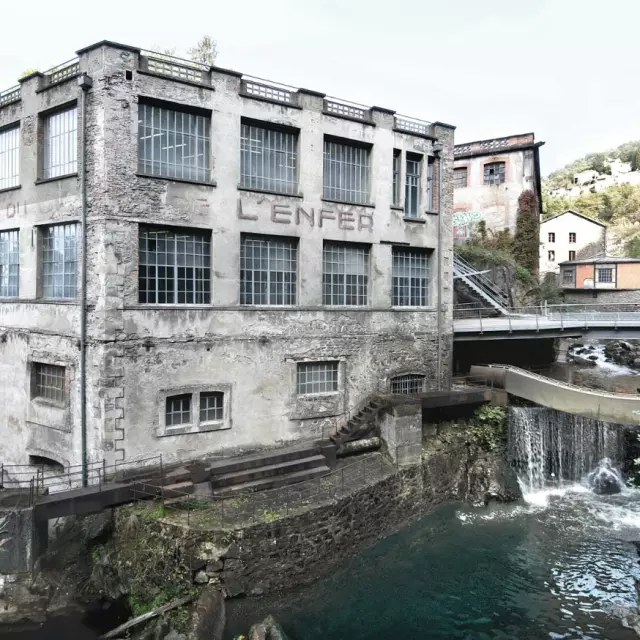
Le Creux de l’Enfer is located in a former cutlery factory, closed in 1956, which has been transformed into a centre for contemporary art. Since its inauguration in 1988, Le Creux de l’Enfer has been a testament to France’s policy of cultural decentralisation, reflecting its commitment to art and culture outside the traditional metropolises. Labelleda‘Centre d’art contemporain d’intérêt national‘ by the Ministry of Culture in 2019, Le Creux de l’Enfer stands out as a pillar of the regional and national arts scene. This official recognition underlines the excellence of its exhibitions, its educational programmes, and its ability to forge links between artists and local know-how.
The extension of the Creux de l’Enfer, with the acquisition of theUsinedu May, has enabled the museum to expand its exhibition space and enhance its cultural offering. This architectural development means that we can develop ambitious new artistic projects and share a wide range of experiences with the public. Each exhibition, workshop and conference invites reflection on art and its role in society. This venue is a must for art lovers and the curious of all backgrounds.
At the moment, you can discover the work of Benoit-Marie Moriceau with the exhibition“Stellar song, please don’t take my sunshine away“.