La Chaise-Dieu Festival 3La Chaise-Dieu Festival 3
©Abbaye de La Chaise-Dieu|© Bertrand PICHENE - FLCD

Abbaye de La Chaise-Dieu, Auvergne abbey

If you’ve decided to explore the Livradois-Forez Regional Nature Park, La Chaise-Dieu is a must-see on your trip. Despite its small size, the village is surprisingly large. La Chaise-Dieu Abbey is a central part of this heritage. In fact, the village owes its name to the abbey, which was rebuilt on the ruins of the “Casa Dei” monastery. The word “chaise” comes from the Latin “Casa” and became “Chaise Dieu” over the centuries as the French language evolved.

Discover our religious past of La Chaise-Dieu

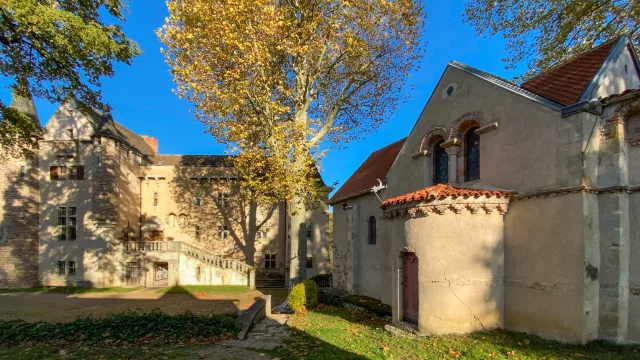
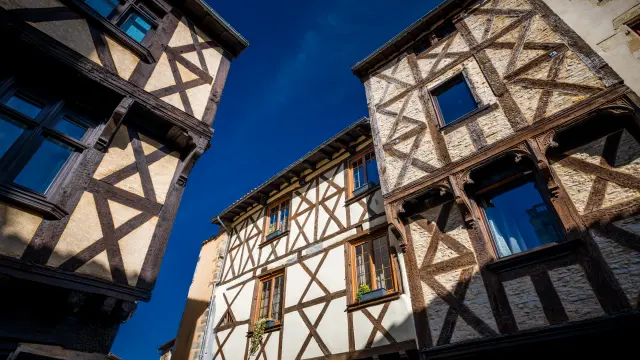
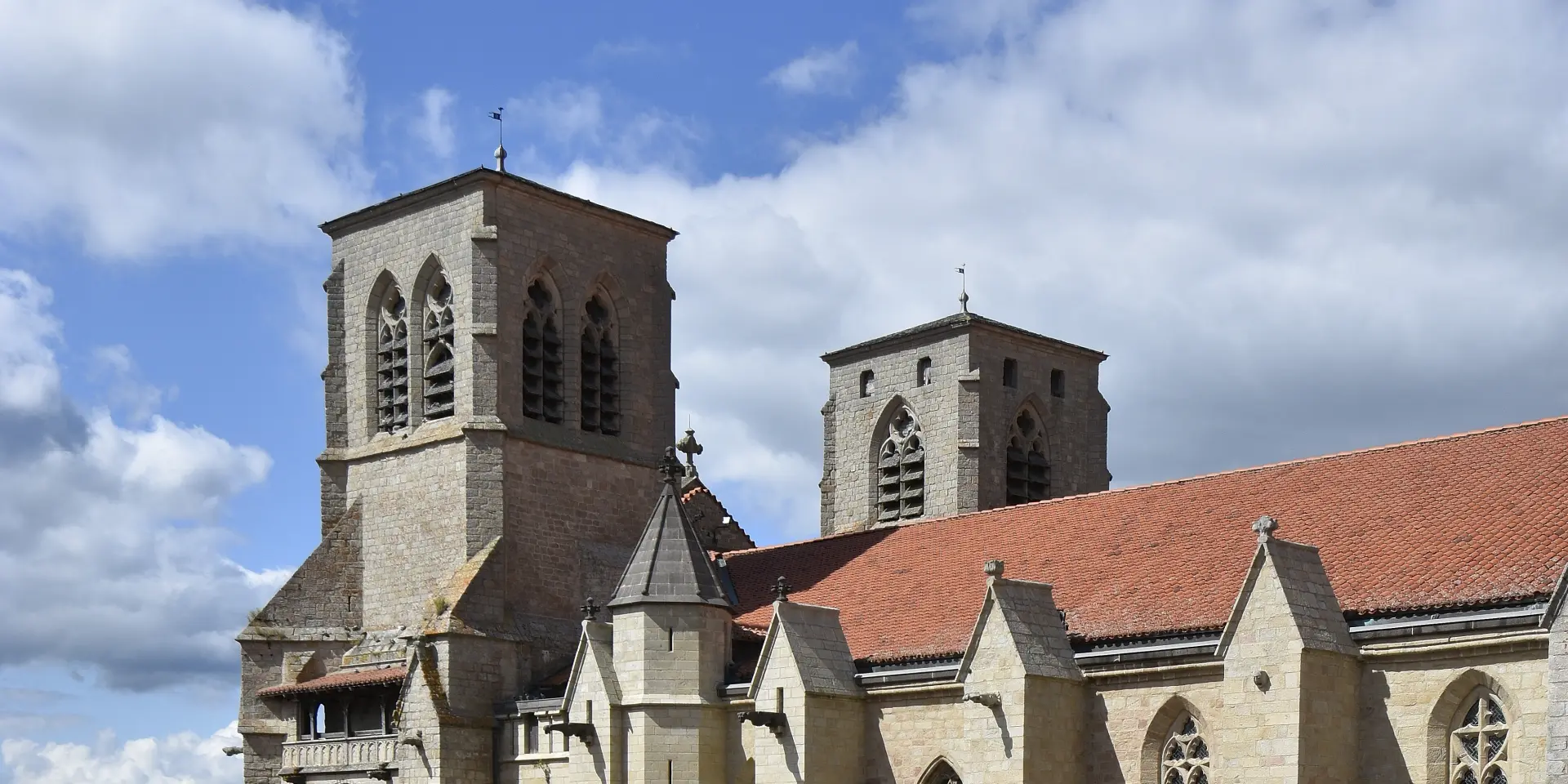
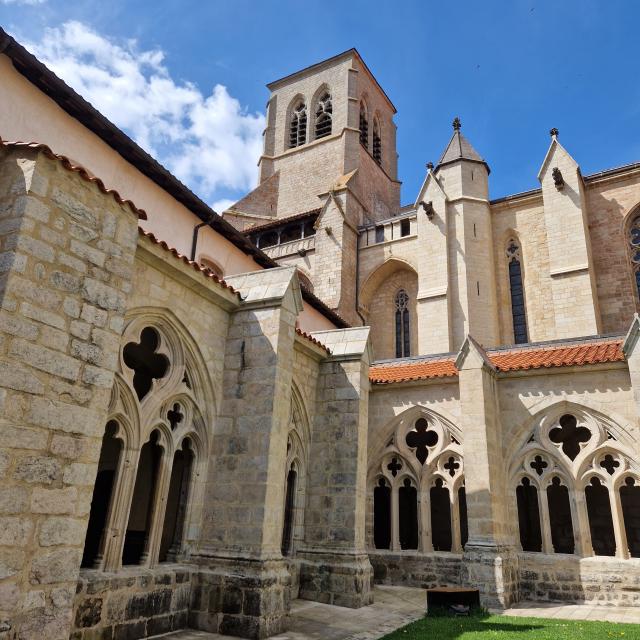
As soon as you arrive, your feet will inevitably guide you towards the unmissable Abbaye de La Chaise-Dieu. Founded in the Middle Ages by the Saint of the same name and rebuilt in the XIXᵉ century by Clement VI, it marks the landscape with majesty. The village of La Chaise-Dieu, with its peaceful courtyards, squares and narrow streets lined with ancient houses, is an invitation to stroll that will delight lovers of the bucolic and authentic.

Built in the XIᵉ century on a granite plateau, at an altitude of over 1,000 metres in the heart of the Auvergne,La Chaise-Dieu Abbey stands on the road coming from the east, from Brioude. Founded by Robert de Turlande, canon of Brioude, who was looking for a secluded place for a life of prayer and solitude, this abbey overlooked the pilgrims’ routes. Closed during the Revolution in 1790, its abbey church was converted into a parish church. In the XXᵉ century, a new religious community revitalised the site, continuing to welcome pilgrims and visitors.
Did you know?

In 1790, theAbbeyof La Chaise-Dieu was closed following a series of decisions taken by the National Assembly in 1789, marking the end of monastic life in France. Ecclesiastical property was nationalised on 2 November, followed by an obligation for religious communities to declare their assets in November. In February 1790, monastic vows were banned and religious orders dissolved.

The closure was carried out peacefully under the supervision of Dom Pierre Terrasse, the last prior, who was later appointed mayor. He organised a calm inventory of the abbey’s possessions, including a vast library of 5,853 volumes, which was divided between the bishopric of Saint-Flour and the municipality of Brioude.

Although the abbey church was largely preserved by the local inhabitants, the other buildings were neglected and looted, then sold at auction in 1793. This tumultuous period subsided with the Concordat of 1801, signed between Bonaparte and Pope Pius VII, which restored a degree of peace until the Restoration, when the abbey church was converted into a parish church in 1820, replacing three former local churches which were then closed and destroyed.

Let yourself be enchanted by the organs the Abbey Church of Saint-Robert

Once inside the abbey church, marvel at the organs, witnesses to the town’s musical and artistic history. Comprising two distinct parts, the positive organ and the grand buffet, which date from the XVIIᵉ and XVIIIᵉ respectively.

After being damaged during the French Revolution, these organs were restored, regaining their voice in 1976. A second restoration, completed in 1995, restored them fully to their former glory. Today, the organs illustrate the musical magnificence ofLaChaise-Dieu Abbey. They are not only used for the liturgy, but are also a central feature of the La Chaise-Dieu Festival, creating a profound link between music and historical heritage.

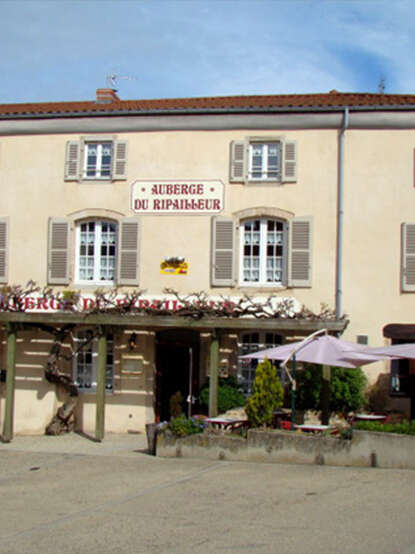
Accommodation and restaurants in and around La Chaise-Dieu

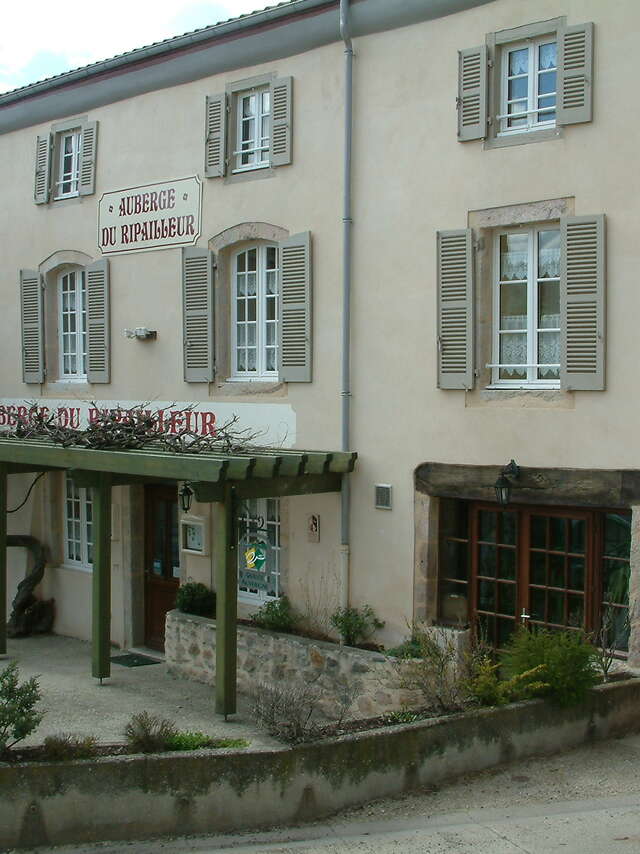
To make the most of this exceptional weekend, find out more about the accommodation and restaurants around La Chaise-Dieu.

The fourteen Flemish tapestries of the Abbaye de la Chaise-Dieu

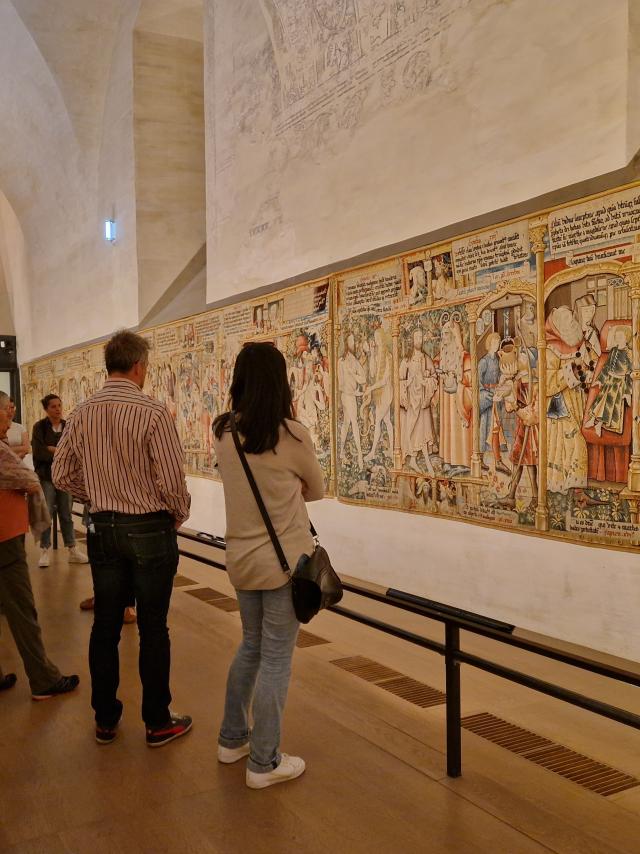
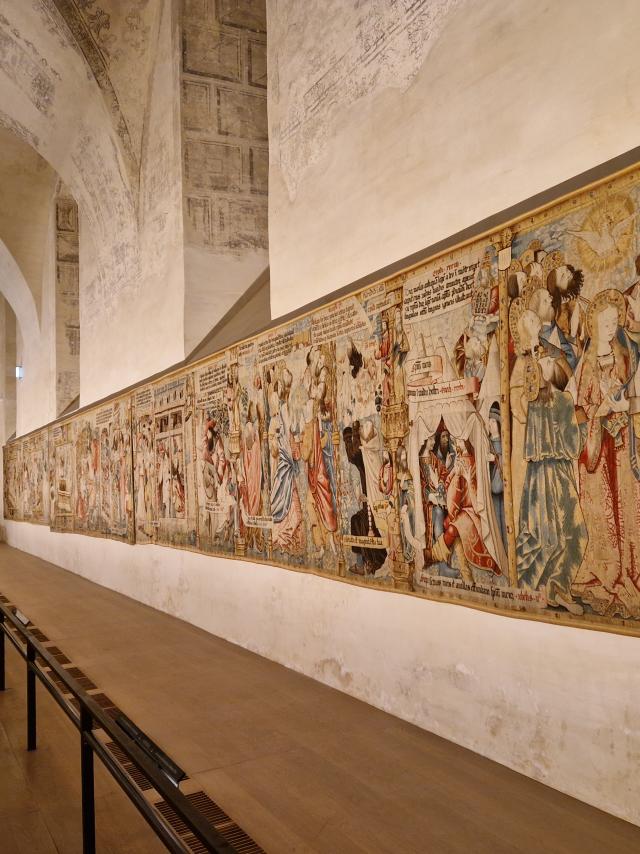
There’s more to come. The abbey complex at La Chaise-Dieu conceals another treasure. The precious Flemish tapestries from the XVIᵉ century are back after a meticulous restoration.

These fourteen tapestries, commissioned by theAbbéde Saint-Nectaire, are remarkable examples of Flemish art. Made from wool, linen, silk and metallic threads, they illustrate the richness and complexity of this art.

These works, which tell stories from theOldand New Testaments, are now housed in the former Notre-Dame du Collège chapel, which has been specially restored to house and preserve them.

Come and discover the new exhibition space, where architect Richard Goulois has created a setting that respects both the historical heritage and contemporary conservation requirements.