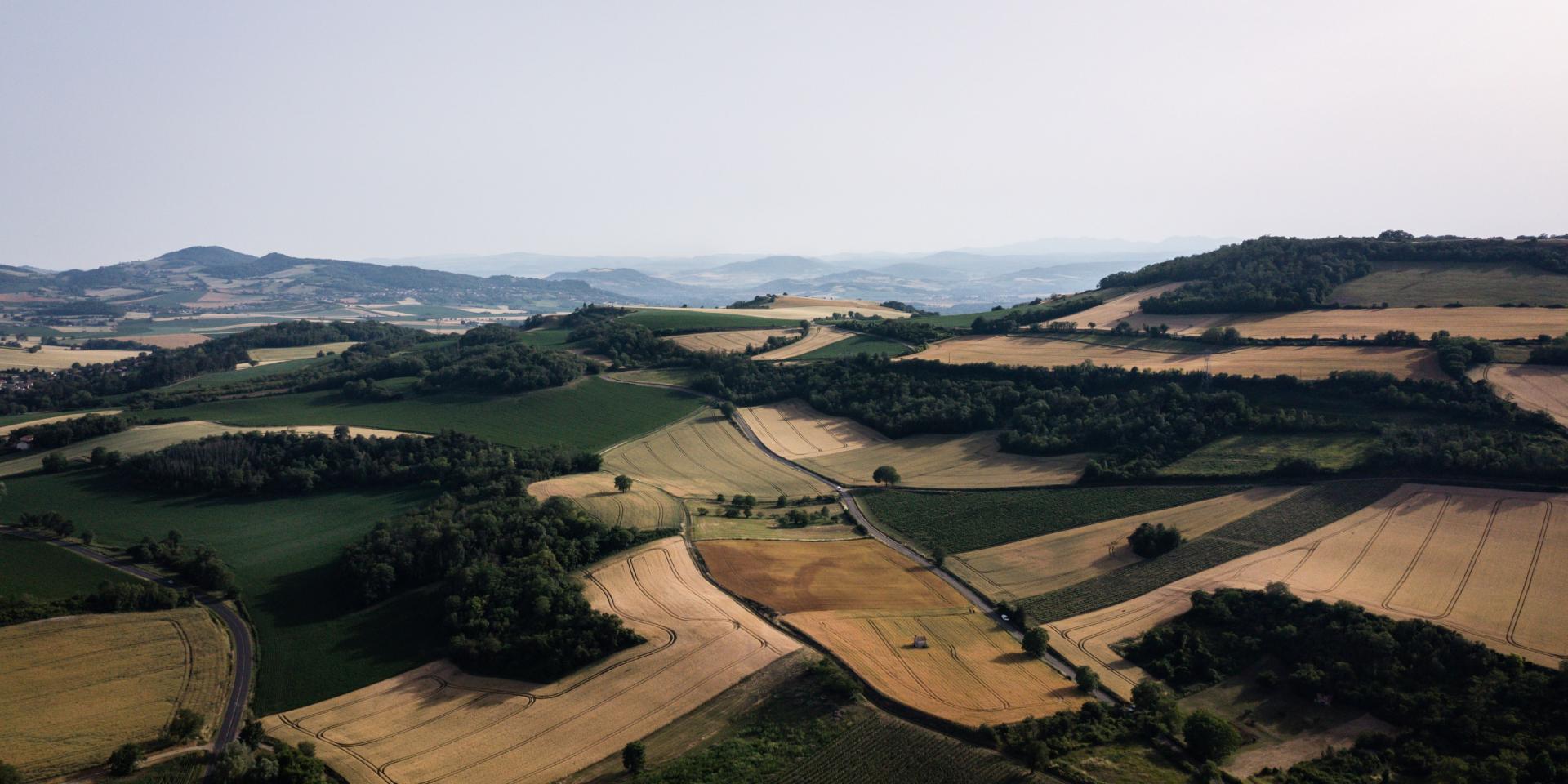
Auvergne TuscanyDji 0475
©Auvergne Tuscany|Benjamin Vallet

Livradois-Forez, a sustainable destination

Come and take a deep breath of fresh air in the heart of nature!

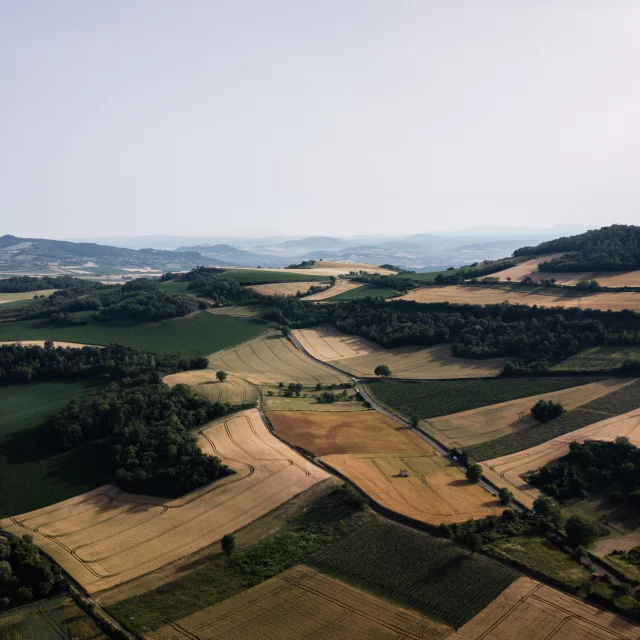
The Livradois-Forez Regional Nature Park covers three départements: Puy-de-Dôme, Haute-Loire and Loire. Explore the 311,035 hectares of forests, plains, rivers and many other landscapes. Here in the Auvergne, you can enjoy environmentally-friendly tourism. The Livradois-Forez region, with its rich natural and cultural heritage, is building its identity on its distinctive features, while striving to preserve them. As a result, the major environmental challenges of this century are also its own.

The region is home to a wide variety of natural environments. Its geography is such that nature is close at hand. A land of contrasts, the Livradois-Forez is home to a remarkable range of flora and fauna. To preserve this natural area, the Park is carrying out studies, relying on a network of naturalist contributors and on the surveys carried out by its agents. Find out more about biodiversity to protect it more effectively.

A responsible label: Regional nature park values

The “Valeurs Parc naturel régional” brand is an initiative of the Fédération des Parcs naturels régionaux de France.

It enables businesses located in a Regional Nature Park to engage in collective and supportiveinitiatives, thereby contributing to sustainable development. By adopting this mark, businesses commit to preserving the environment, improving the well-being of local residents and supporting the local economy. The Parks, in turn, work with these businesses to enhance the unique natural and cultural resources of each area. The label is awarded on the basis of a rigorous contractual commitment to sustainable development.
Pnr Logo Pantone CopyPnr Logo Pantone Copy
©Pnr Logo Pantone Copy

The Livradois Forez Regional Nature Park commits to diversity with the Green and Blue Contract

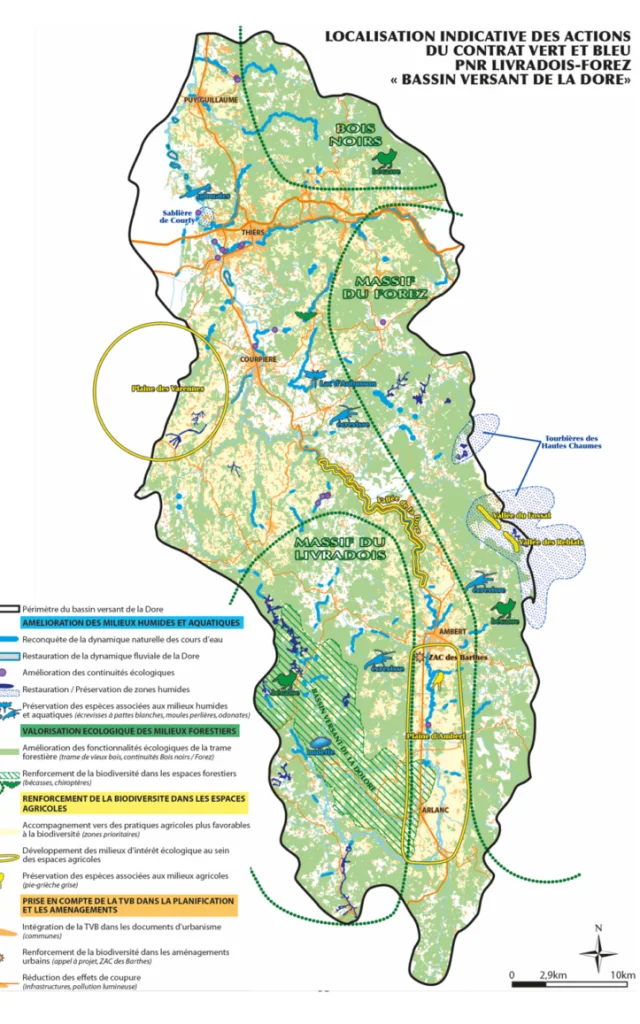
The Livradois-Forez Regional Nature Park ‘s “Green and Blue Contract” is a committed project aimed at protecting and enhancing the diversity of the ecosystems it supports.

Focusing on the Dore catchment area, the project runs for six years (2020-2025) and concentrates on key actions such as improving aquatic and wetland environments, enhancing biodiversity in forests and agricultural areas, and integrating green and blue webs into town planning.

Through 64 detailed actions, the contract aims to restore watercourses, diversify forests, encourage biodiversity-friendly farming practices and raise public awareness of the importance of ecological continuity. This project represents a strong commitment by the Park to protecting and enhancing its natural heritage.

Are you familiar with green, blue and black screens?

Imagine our environment as a large jigsaw puzzle, each piece a natural habitat. The green, blue and blackwebs are like the paths that connect these pieces. The green grid connects terrestrial areas such as forests and meadows, allowing animals and plants to move around and flourish. The blue grid does the same thing, but for aquatic environments such as rivers and lakes, ensuring the circulation of water and aquatic species.

Finally, the black grid tackles a less visible problem: light pollution. By preserving areas of darkness, it helps to protect the nightlife of animals and the starry sky. Together, these grids help to maintain a healthy and diverse environment for all living things.

Focus on Natura 2000 sites: 

The link between Natura 2000 and the green, blue and black corridors lies in their shared objective of preserving biodiversity and ecosystems. Natura 2000 is a network of natural sites across Europe, designed to protect rare or threatened species and habitats. Together, Natura 2000 and the ecological networks form an integrated network that promotes habitat continuity and ecological connectivity across the landscape.

The Livradois-Forez Regional Nature Park is home to six sites included in the Natura 2000 network:

Sustainable travel in Livradois-Forez

If you’d like to spend a night bivouacking in the heart of nature, it’s possible to combine “respect for nature” with a “responsible holiday” in the Livradois-Forez. Here are a few tips from the Maison du tourisme on how to bivouac with peace of mind:

Bivouacking prohibited:
  • On a public road.
  • Within 500 m of a historic monument.
  • Within 200 m of a drinking water supply.
  • In national nature reserves, state biological reserves and areas defined by decree.
  • Camping is prohibited in the Haut Forez classified site, but bivouacs are permitted.
  • It is forbidden to light fires within 200 m of the edge of a wood or forest.

Where to bivouac?
  • Bivouacs are tolerated as part of a touring trek.
  • Installation authorised at sunset and must be folded by sunrise.
  • Agreement required from the owner of the land, whether private or public.
    Specific restrictions
  • Leave the site clean: take away all rubbish and personal hygiene products.
  • Restore the site to its original state after the bivouac.
  • Be discreet so as not to disturb the fauna, especially during the breeding and nesting periods.

Find accommodation and travel eco-responsible

If you’re not in the mood to “bivouac” in the great outdoors, don’t worry! You can stay with service providers committed to the “Regional Natural Park Values” approach. This approach respects nature, the environment and our heritage.

Below is a list of the service providers involved. Come and meet them, the journey starts here, so feel free to make the most of it.